xuye
xuye全站搜索
Search the entire website
整站搜索产品中心新闻中心
点击开始搜索
热门搜索
UltraForm-MXFlexiPoly-RNanoForm Z300EcoFab P200
Search the entire website
Scope of application
It is widely used in the fields of electronic component sintering, powder material preparation, ceramic process research and development, lithium battery positive and negative electrode material heat treatment, etc. It is especially suitable for precision experiments in laboratories of colleges and universities, research institutes and industrial and mining enterprises.
The split tube furnace is a tubular heating device that separates the heating furnace body from the control system. It is widely used in laboratory research, material sintering, ceramic processing, metal heat treatment, and other fields. Its split structure provides greater operational flexibility, safety, and temperature control accuracy, and is suitable for a variety of process requirements in high-temperature environments.
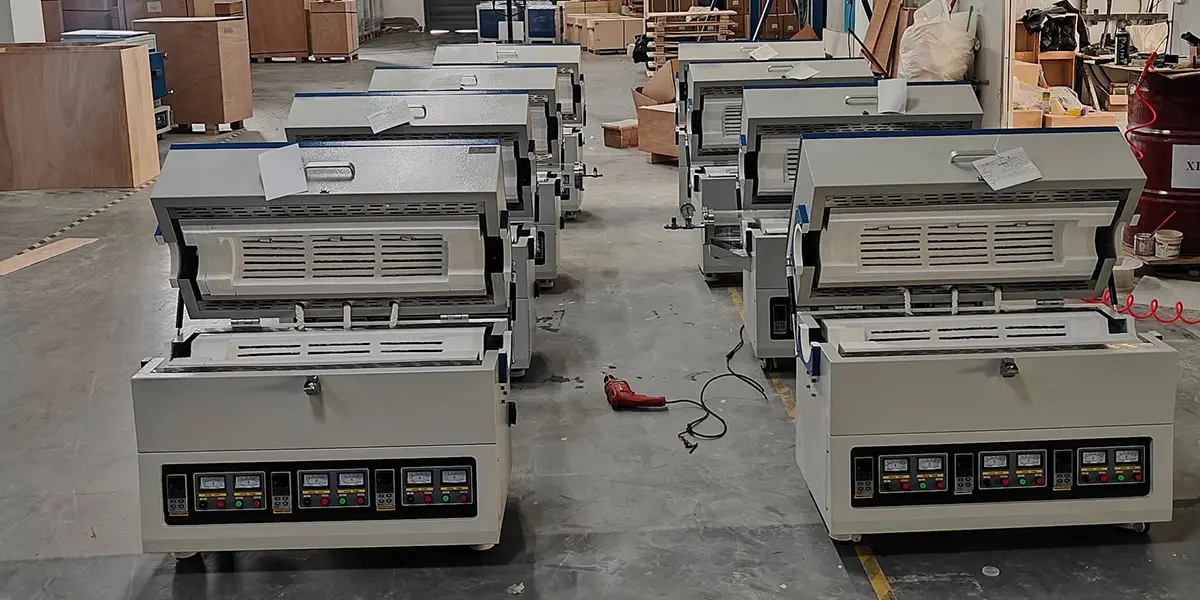
A split tube furnace operates on the same basic principle as other tube furnaces: it heats materials placed inside a tubular work zone using resistive heating elements. However, the split configuration gives it several unique benefits.
Structure and Components
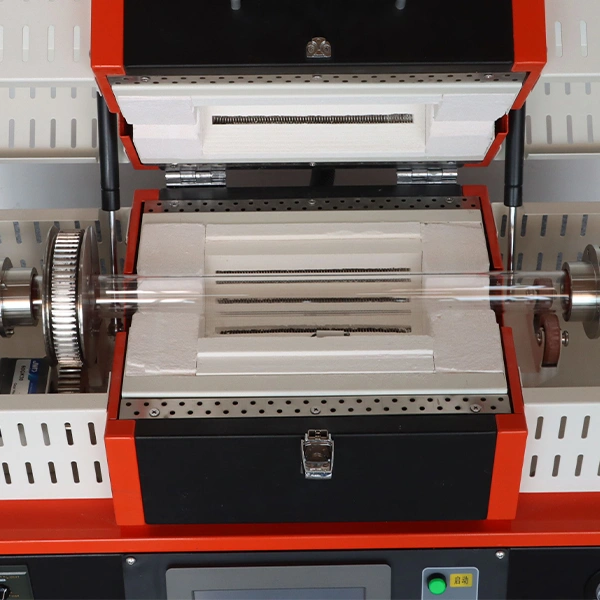
Split housing design: The outer shell is built in two halves connected by a hinge. This enables the furnace to open fully for easy installation of quartz or ceramic tubes.
Heating elements: Typically made from Kanthal wire, silicon carbide (SiC), or molybdenum disilicide (MoSi₂), depending on the temperature range.
Insulation material: Advanced ceramic fiber boards or alumina wool ensure efficient heat retention and energy conservation.
Temperature control system: Precision PID temperature controllers allow programmable heating curves, ramp rates, and safety interlocks.
Gas/vacuum ports: Optional for conducting heat treatments in vacuum, inert, or reducing atmospheres.
Key Advantages of Split Tube Furnaces
The split tube design offers numerous advantages over conventional tube furnaces, especially for applications requiring repeated sample access or integration with external devices.
Easy Sample Loading and Tube Replacement
Opening the furnace along its split axis allows quick removal or replacement of sample tubes without disassembling the entire setup.
Better Maintenance and Cleaning
The split structure makes internal inspection and heater maintenance far easier and safer.
Enhanced Experimental Flexibility
Researchers can insert thermocouples, gas nozzles, or vacuum ports directly into the central heating zone.
Compact and Modular
Split furnaces are often compact and portable, making them ideal for laboratory use where space and flexibility are important.

| Model | Max temperature | Heating zone length | Constant temperature zone length | Power and voltage | Furnace tube size | Dimensions |
| YXG-1200-A1 | 1200℃ | 200mm | 60mm | 1.5kW/AC220V | φ30/50*500mm | 800*340*400mm |
| YXG-1200-A2 | 1200℃ | 440mm | 120mm | 3kW/AC220V | φ30/100*1000mm | 1120*480*530mm |
| YXG-1200II-200 | 1200℃ | 200+200mm | 200mm | 3KW/AC220V | φ30/100*1000mm | 1100*420*560mm |
| YXG-120OIII-200 | 1200℃ | 3*200mm | 3*60mm | 4.5KW/AC220V | φ30/100*1000mm | 1400*420*560mm |
| YXG-1400-400 | 1400℃ | 400mm | 120mm | 5kW/AC220V | φ30/100*1000mm | 1200*500*660mm |
| YXG-140OIl-200 | 1400℃ | 200+200mm | 200mm | 5kW/AC220V | φ30/100*1000mm | 1200*500*660mm |
| YXG-1700-290 | 1700℃ | 290mm | 80mm | 6kW/AC220V | φ30/100*1000mm | 1300*640*870mm |
Online Message