 xuye
xuye全站搜索
Search the entire website
整站搜索产品中心新闻中心
点击开始搜索
热门搜索
UltraForm-MXFlexiPoly-RNanoForm Z300EcoFab P200
Search the entire website
Scope of application
A vacuum tube furnace is a high-temperature processing equipment that is heated by electric heating elements in a closed tubular furnace and operates in a vacuum or controlled atmosphere environment. It is widely used in materials science, metallurgy, chemical engineering, electronics and other fields.
Vacuum tube furnace is a device that heats materials at high temperatures in a vacuum or inert gas environment. Its operating principle is based on transferring heat generated by electric heating elements to the sample within a specific environment, achieving precise heat treatment. The specific process is as follows:
Electric heating element heating: Electric heating elements such as resistance wires and molybdenum silicon rods are placed within the furnace. When current flows through them, heat is generated and radiated into the furnace chamber.
Heat transfer: In a vacuum or inert gas environment, heat is transferred primarily through conduction (the thermal conductivity of gases in a vacuum is poor), supplemented by natural convection.
Environmental control: The furnace chamber is evacuated using a vacuum pump and, when necessary, filled with inert gases such as argon and nitrogen to prevent oxidation of the material.
The core components include the furnace body (including the outer shell, chamber, and inner lining), electric heating elements, a temperature control system (temperature sensor, PID controller), a vacuum/inert gas system (vacuum pump, valves, gas source), and a sample holder and transmission mechanism.
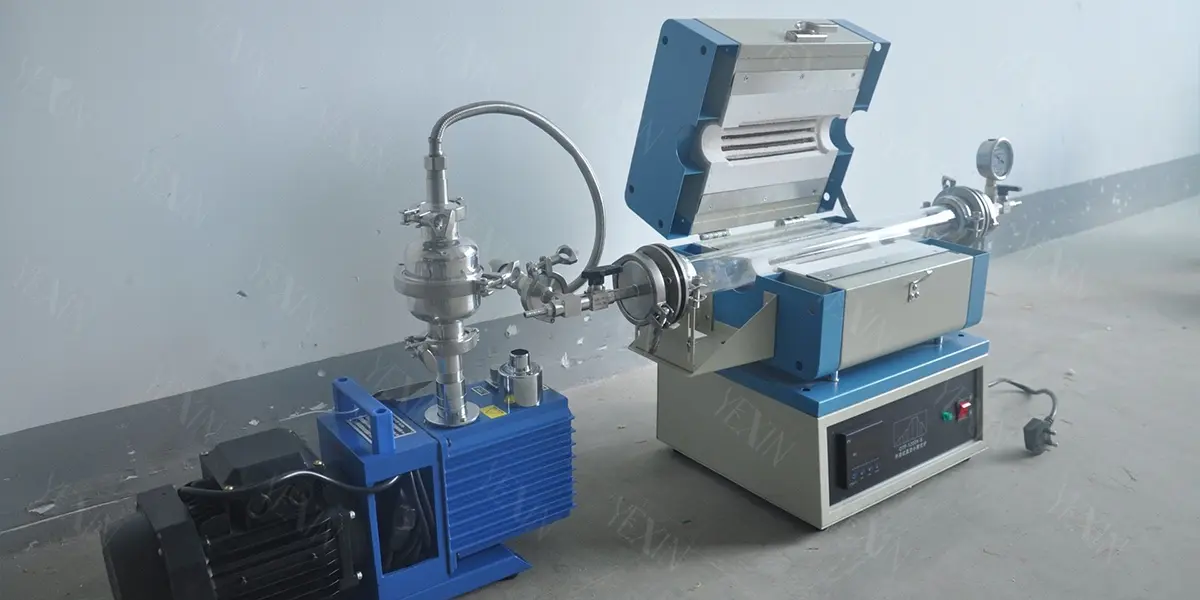
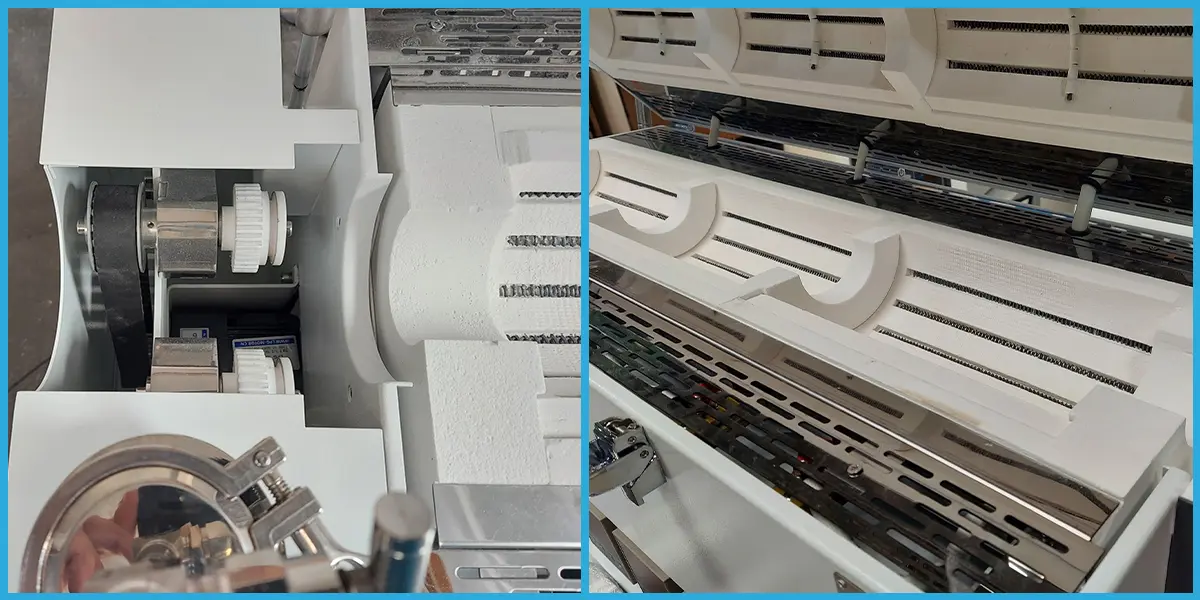
Furnace Structure: Consists of an outer shell, furnace chamber (commonly made of 99% corundum tubes), and an alumina fiber insulation layer to ensure thermal insulation and high-temperature resistance.
Temperature Control System: Consists of a closed-loop control system consisting of thermocouples, PID intelligent regulators, and thyristors for high-precision temperature control (e.g., imported single-loop intelligent temperature controllers).
Vacuum and Atmosphere System: Equipped with a vacuum pump, float flowmeter, and inert gas interface, it supports vacuuming and filling with protective gases (e.g., argon and nitrogen).
Heating Elements: Utilize high-quality silicon-molybdenum rods for fast heating and long life, suitable for high-temperature environments.
1.Material Science and R&D
High-temperature, medium-temperature, and low-temperature chemical vapor deposition (CVD), such as ZnO nanostructure growth and silicon nitride coating.
New material synthesis and performance optimization, supporting ceramic substrate conductivity testing, MLCC atmosphere sintering, and more. Industrial Production and Processing
Metallurgy: Annealing, quenching, and tempering of metal materials to improve mechanical properties and corrosion resistance.
Ceramics and Glass: Precisely control the firing process to ensure product density and hardness.
Semiconductors and Electronic Devices
PECVD/CVD Coating: Deposition of silicon and metal thin films for integrated circuit and optoelectronic device production.
A vacuum environment reduces pollution and improves the reliability of electronic devices.
2.Research and Environmental Protection
Laboratory elemental analysis, high-temperature waste incineration, and resource recovery.
Clean Energy: Biomass energy conversion and solar material preparation.
Equipment Features, Usage Instructions, and Maintenance Tips
High Precision and Efficiency: The multi-station design supports independent temperature control, improving equipment utilization; excellent temperature uniformity and rapid heating.
Vacuum Protection: Prevents material oxidation, making it suitable for processing sensitive materials; an optional inert gas atmosphere expands application scenarios.
Operational Convenience: Intermittent manual loading and unloading, a user-friendly interface, and support for automatic temperature control. Usage and Maintenance Precautions
Pre-treatment for First Use: Bake at 120°C for 1 hour and 300°C for 2 hours to prevent furnace cracking.
Safe Operation: Do not operate above the rated temperature and avoid pouring liquid or molten metal into the furnace.
| Model | Max temperature | Heating zone length | Constant temperature zone length | Power and voltage | Furnace tube size | Dimensions |
| YXG-1200-A1 | 1200℃ | 200mm | 60mm | 1.5kW/AC220V | φ30/50*500mm | 800*340*400mm |
| YXG-1200-A2 | 1200℃ | 440mm | 120mm | 3kW/AC220V | φ30/100*1000mm | 1120*480*530mm |
| YXG-1200II-200 | 1200℃ | 200+200mm | 200mm | 3KW/AC220V | φ30/100*1000mm | 1100*420*560mm |
| YXG-120OIII-200 | 1200℃ | 3*200mm | 3*60mm | 4.5KW/AC220V | φ30/100*1000mm | 1400*420*560mm |
| YXG-1400-400 | 1400℃ | 400mm | 120mm | 5kW/AC220V | φ30/100*1000mm | 1200*500*660mm |
| YXG-140OIl-200 | 1400℃ | 200+200mm | 200mm | 5kW/AC220V | φ30/100*1000mm | 1200*500*660mm |
| YXG-1700-290 | 1700℃ | 290mm | 80mm | 6kW/AC220V | φ30/100*1000mm | 1300*640*870mm |

Online Message
