xuye
xuye全站搜索
Search the entire website
整站搜索产品中心新闻中心
点击开始搜索
热门搜索
UltraForm-MXFlexiPoly-RNanoForm Z300EcoFab P200
Search the entire website
Scope of application
Widely used in gas-phase synthesis of nanomaterials, such as CVD growth of carbon nanotubes (CNTs) (by introducing acetylene/methane to crack at 800-1100°C), chemical vapor deposition of two-dimensional materials (such as MoS₂), and pyrolysis synthesis of quantum dots; in energy material research, it is used for nitrogen-protected sintering of lithium battery cathode materials (to prevent oxidation).
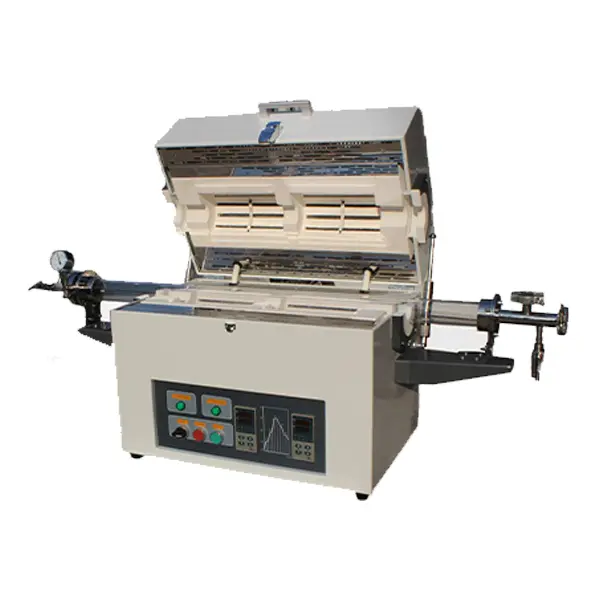
lab tube furnace is a high-temperature heating device widely used in laboratories or small-scale R&D. It features a tubular furnace chamber, using electric heating elements to uniformly heat samples within a sealed tube. Compared to large industrial furnaces, laboratory tube furnaces offer a compact design, precise temperature control, and controlled atmosphere, making them suitable for small-batch material processing, process R&D, and performance testing.
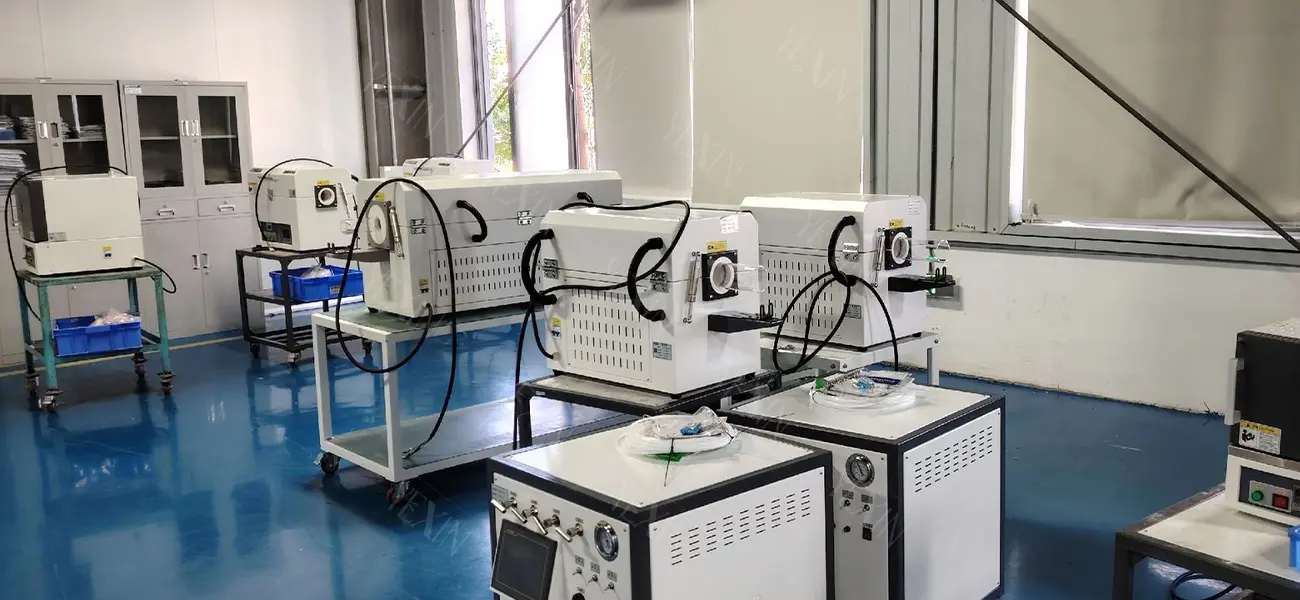
Typical features include:
The furnace chamber is cylindrical or mounted horizontally or vertically.
The sample is placed within a high-temperature-resistant tube such as a quartz tube, corundum tube, or silicon carbide tube.
It can operate in air, inert gas, reducing atmosphere, or even vacuum.
The temperature range extends from room temperature to 1800°C (depending on the heating element and tube material).
II. Structural Components
A laboratory tube furnace primarily consists of the following components:
Furnace Shell
This shell is typically constructed of cold-rolled steel with an electrostatically sprayed plastic coating, and is filled with high-density insulation material. It offers an attractive appearance, corrosion resistance, and excellent thermal insulation.
Heating Elements
Common Materials: FeCrAl alloy wire (≤1200°C), SiC silicon carbide rod (≤1500°C), MoSi₂ (≤1800°C)
Evenly distributed around the furnace to ensure a stable temperature field.
Furnace Tube (Working Tube)
Material: Quartz (≤1200°C), 99% high-purity corundum (≤1800°C), Silicon Carbide (corrosion-resistant and high-temperature), Stainless Steel (special atmosphere)
Dimensions: Common inner diameters range from 25 to 150 mm, and lengths range from 600 to 1500 mm.
Sealing flange & piping system
Equipped with high-temperature-resistant O-rings or water-cooled sealing structure
Can be connected to the gas system to achieve inert gas, reducing atmosphere, or vacuum operation
Temperature control system
Equipped with an intelligent PID thermostat, with programmable ramp, constant temperature, and cooling curves
Supports multi-stage programming (commonly 16 to 50 stages), with a temperature control accuracy of ±1°C
Safety protection system
Overtemperature protection, burnout protection, overcurrent/leakage protection
High temperature alarm and power-off protection
III. Main Types
Based on the installation method, number of heating zones, and atmosphere conditions, laboratory tube furnaces can be divided into the following categories:
By Installation Method
Horizontal Tube Furnace: General-purpose, easy to operate
Vertical Tube Furnace: Suitable for gravity settling and gas-solid reactions
Split Tube Furnace/Open Tube Furnace Furnace: Convenient for changing furnace tubes and loading and unloading samples
By number of temperature zones
Single zone: Single heating zone, stable temperature field
Dual zone: Enables temperature gradients
Triple zone: Enables long constant temperature zones or complex temperature distributions
By atmosphere conditions
Atmospheric pressure air atmosphere
Inert gas blanket (argon, nitrogen, etc.)
Reducing atmosphere (hydrogen, mixed gas, etc.)
Vacuum tube furnace
V. Application Areas
Laboratory tube furnaces are widely used in fields such as materials science, chemical engineering, energy research and development, and environmental engineering. For example:
Powder material sintering (ceramics, metal powders, catalysts)
Heat treatment (annealing, tempering, and quenching experiments)
CVD/PVD thin film deposition and growth
Gas-solid reaction research
Carbonization and activation (production of activated carbon and biochar)
Crystal growth and annealing
VI. Selection Recommendations
Temperature Rating: Select the heating element and furnace tube material based on the maximum process temperature.
Tube Diameter and Length: Determine based on sample size and batch size.
Number of Temperature Zones: Multiple temperature zones are available if a temperature gradient is required.
Atmosphere Conditions: If inert, reducing, or vacuum conditions are required, the corresponding gas path and sealing system must be configured.
Safety and Data Functionality: Whether over-temperature alarm, program storage, and data export are required.
| Model | Max temperature | Heating zone length | Constant temperature zone length | Power and voltage | Furnace tube size | Dimensions |
| YXG-1200-A1 | 1200℃ | 200mm | 60mm | 1.5kW/AC220V | φ30/50*500mm | 800*340*400mm |
| YXG-1200-A2 | 1200℃ | 440mm | 120mm | 3kW/AC220V | φ30/100*1000mm | 1120*480*530mm |
| YXG-1200II-200 | 1200℃ | 200+200mm | 200mm | 3KW/AC220V | φ30/100*1000mm | 1100*420*560mm |
| YXG-120OIII-200 | 1200℃ | 3*200mm | 3*60mm | 4.5KW/AC220V | φ30/100*1000mm | 1400*420*560mm |
| YXG-1400-400 | 1400℃ | 400mm | 120mm | 5kW/AC220V | φ30/100*1000mm | 1200*500*660mm |
| YXG-140OIl-200 | 1400℃ | 200+200mm | 200mm | 5kW/AC220V | φ30/100*1000mm | 1200*500*660mm |
| YXG-1700-290 | 1700℃ | 290mm | 80mm | 6kW/AC220V | φ30/100*1000mm | 1300*640*870mm |

Online Message