 xuye
xuye全站搜索
Search the entire website
整站搜索产品中心新闻中心
点击开始搜索
热门搜索
UltraForm-MXFlexiPoly-RNanoForm Z300EcoFab P200
Search the entire website
A pyrolysis tube furnace is a specialized device used for high-temperature pyrolysis (decomposition of materials in the absence or absence of oxygen). It is widely used in fields such as materials science, energy, and environmental engineering, including biomass conversion, carbon material preparation, and waste treatment. The following is a detailed explanation of the pyrolysis tube furnace:
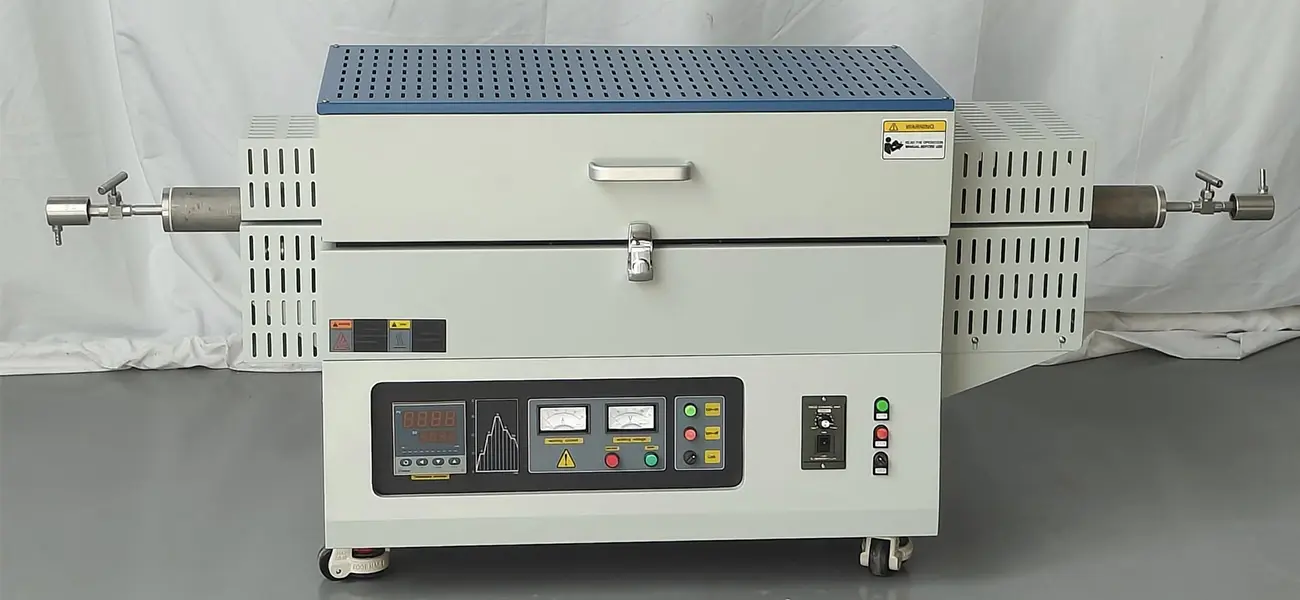
Quartz tube: Suitable for temperatures ≤1200°C (transparent, allowing for easy observation of the reaction process).
Corundum tube (Al₂O₃): High-temperature resistant up to 1600°C, with strong thermal shock resistance.
Graphite tube: Suitable for ultra-high temperatures (above 1800°C) or reducing atmospheres.
Heating System:
Resistance heating (silicon carbon rods, silicon molybdenum rods) or induction heating. A multi-temperature zone design (e.g., 3-5 zones) ensures temperature uniformity (±2°C).
Gas Control:
Inert gas (N₂, Ar) or reducing gas (H₂) is introduced to prevent sample oxidation; a vacuum system (10⁻³ mbar) is optional.
Sealing:
Metal seals or O-rings (high-temperature resistant) are used at the flange interface to ensure an oxygen-free environment.
Biomass pyrolysis to produce biochar and activated carbon.
Carbonization of polymers (e.g., PAN) to produce carbon fibers.
Energy Materials:
Synthesis of lithium battery anode materials (e.g., graphene, hard carbon).
Pyrolysis and recycling of waste battery materials (e.g., decomposition of cathode materials).
Environmental Engineering:
Pyrolysis and oil production or gasification of plastic/rubber waste.
Pyrolysis and reduction of sludge.
Conventional: 300-1200°C; Ultra-High Temperature: 1200-1800°C (requires special heating elements).
Furnace Tube Dimensions:
Diameter (Φ50-200mm) x Length (500-1500mm), which affects sample capacity and pyrolysis efficiency.
Heating Rate:
Rapid heating (10-50°C/min) is suitable for scientific research, while slower heating (1-5°C/min) is suitable for industrial production.
Atmosphere Control:
Static (closed system) or dynamic (continuous airflow) pyrolysis modes are available.
Seal and Purge: Flow Ar gas for 10-15 minutes to remove air.
Programmed Temperature: Raise the temperature at 10°C/min to the target temperature (e.g., 500-800°C) and hold for 1-2 hours.
Cooling: Turn off heating and continue flowing Ar gas to room temperature to prevent product oxidation.
Collection: Remove solid products (e.g., biochar) and collect liquid products (tar) by condensation.
Cleaning and Maintenance: Regularly clean carbon deposits inside the furnace tubes to prevent them from interfering with heat conduction.
Thermocouple Calibration: Thermocouples are prone to drift at high temperatures and require regular calibration.
Uneven Temperature: Check the heating element for deterioration and adjust the sample position.
Gas Leakage: Replace the sealing ring and check the flange bolt torque.
| Model | Max temperature | Heating zone length | Constant temperature zone length | Power and voltage | Furnace tube size | Dimensions |
| YXG-1200-A1 | 1200℃ | 200mm | 60mm | 1.5kW/AC220V | φ30/50*500mm | 800*340*400mm |
| YXG-1200-A2 | 1200℃ | 440mm | 120mm | 3kW/AC220V | φ30/100*1000mm | 1120*480*530mm |
| YXG-1200II-200 | 1200℃ | 200+200mm | 200mm | 3KW/AC220V | φ30/100*1000mm | 1100*420*560mm |
| YXG-120OIII-200 | 1200℃ | 3*200mm | 3*60mm | 4.5KW/AC220V | φ30/100*1000mm | 1400*420*560mm |
| YXG-1400-400 | 1400℃ | 400mm | 120mm | 5kW/AC220V | φ30/100*1000mm | 1200*500*660mm |
| YXG-140OIl-200 | 1400℃ | 200+200mm | 200mm | 5kW/AC220V | φ30/100*1000mm | 1200*500*660mm |
| YXG-1700-290 | 1700℃ | 290mm | 80mm | 6kW/AC220V | φ30/100*1000mm | 1300*640*870mm |

Online Message
