 xuye
xuye全站搜索
Search the entire website
整站搜索产品中心新闻中心
点击开始搜索
热门搜索
UltraForm-MXFlexiPoly-RNanoForm Z300EcoFab P200
Search the entire website
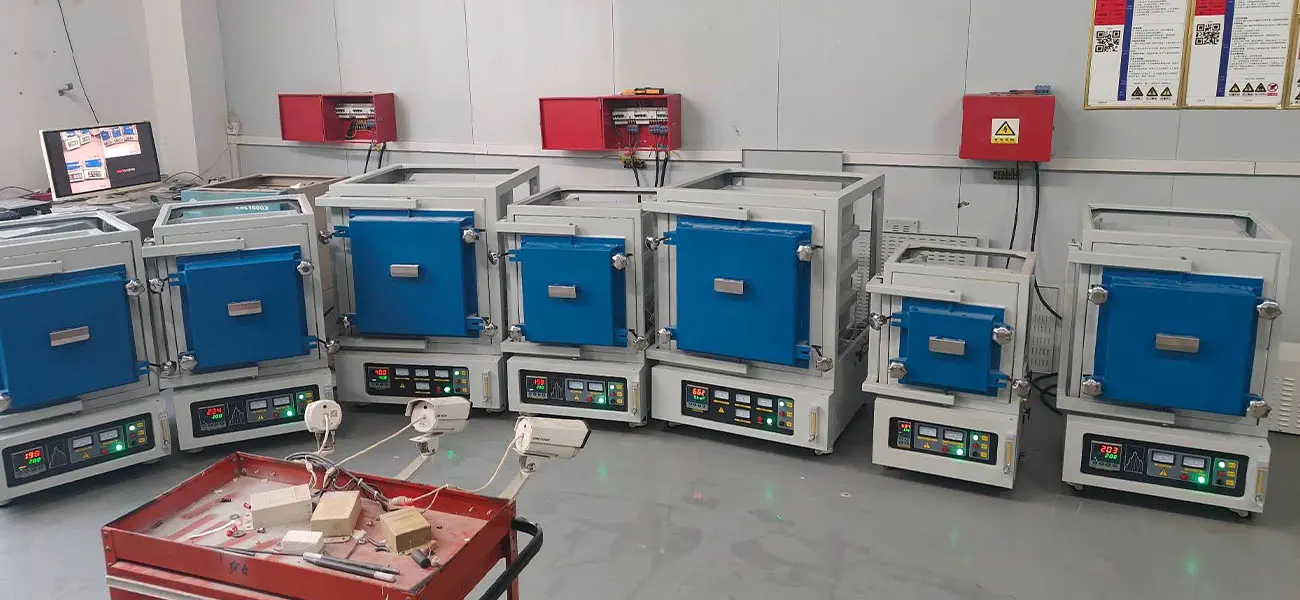
An ashing furnace is a high-temperature heating device specifically designed for measuring the ash content of samples. It is a specialized application of a muffle furnace. It removes organic components from samples through high-temperature combustion, retaining the inorganic residue (ash). It is widely used in quality testing and analytical research in the food, chemical, environmental protection, coal, and pharmaceutical industries.
Basic Working Principle
High-temperature oxidation principle: At a controlled temperature (typically 500-900°C), organic matter in the sample undergoes a complete oxidation reaction with oxygen, generating CO₂ and H₂O that volatilize, leaving behind inorganic salts and minerals.
Pyrolysis principle: Some samples undergo pyrolysis in the absence of oxygen, decomposing organic components into volatile substances and fixed carbon. Ultimately, the carbon is also oxidized and removed.
III. Main Components
Insulation: Multi-layer nanoporous insulation effectively reduces heat loss
Casing: Double-layer stainless steel with forced air cooling
Heating Method: Surround heating to ensure temperature uniformity (within ±5°C)
Heating Rate: Programmable, up to 30°C/min
Human-Machine Interface: 7-inch color touch screen with multi-language support
Data Logging: Built-in memory can store 100 programs and supports USB export
Overcurrent Protection
Automatic power off when furnace door is opened
Abnormal Alarm System
V. Classification of Ashing Furnaces
Coal Ashing Furnaces: Temperatures up to 815°C, complying with ASTM standards
Pharmaceutical Ashing Furnaces: Equipped with precise weighing capabilities, complying with USP standards
Environmental Monitoring Ashing Furnaces: Used for atmospheric particulate matter analysis
Infrared Ashing Furnaces: Fast heating and energy-efficient
Microwave Ashing Furnaces: Short processing time, but expensive
VI. Typical Applications
Mineral Content Analysis of Dairy Products
Condiment Purity Testing
Ash Analysis of Petroleum Coke (ASTM D4422)
Determination of Heavy Metal Content in Traditional Chinese Medicines
Sludge Incineration Residue Testing
VII. Operational Procedure (Taking Food Ash Content Determination as an Example)
Sample Preparation
Accurately weigh 2-5g of sample into a crucible that has been pre-ignited to a constant weight.
Pre-dry the sample.
Carbonization Stage
Place the crucible on an electric furnace and carbonize at low temperature until smoke is eliminated.
Ashing Stage
Transfer the crucible to an ashing furnace preheated to 525±25°C.
Maintain temperature until complete ashing (usually 2-4 hours).
Cool and weigh.
Remove and cool in a desiccator to room temperature.
Accurately weigh and calculate ash content.
| Model | Max.temperature | Inner volume | Inner size | Power and Voltage |
| YX-1200-1L | 1200℃ | 1L | 105*105*110mm | 1KW/AC220V |
| YX-1200-4.5L | 1200℃ | 4.5L | 150*150*200mm | 2.5KW/AC220V |
| YX-1200-7.2L | 1200℃ | 7.2L | 200*120*300mm | 3KW/AC220V |
| YX-1200-18L | 1200℃ | 18L | 250*250*300mm | 5KW/AC220V |
| YX-1200-36L | 1200℃ | 36L | 300*300*400mm | 9KW/AC380V |
| YX-1400-3.6L | 1400℃ | 3.6L | 150*150*160mm | 4KW/AC220V |
| YX-1400-8L | 1400℃ | 8L | 200*200*200mm | 6KW/AC220V |
| YX-1400-18L | 1400℃ | 18L | 250*250*300mm | 9KW/AC220V |

Online Message
