xuye
xuye全站搜索
Search the entire website
整站搜索产品中心新闻中心
点击开始搜索
热门搜索
UltraForm-MXFlexiPoly-RNanoForm Z300EcoFab P200
Search the entire website
Scope of application
In scientific research education and advanced material development, electric muffle furnaces demonstrate high flexibility and reliability. University laboratories commonly use them for new material synthesis and heat treatment research, such as nanomaterial calcination, catalyst activation.
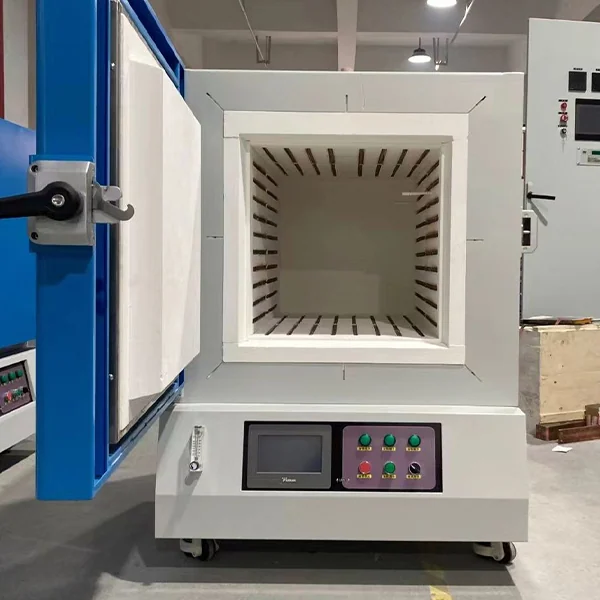
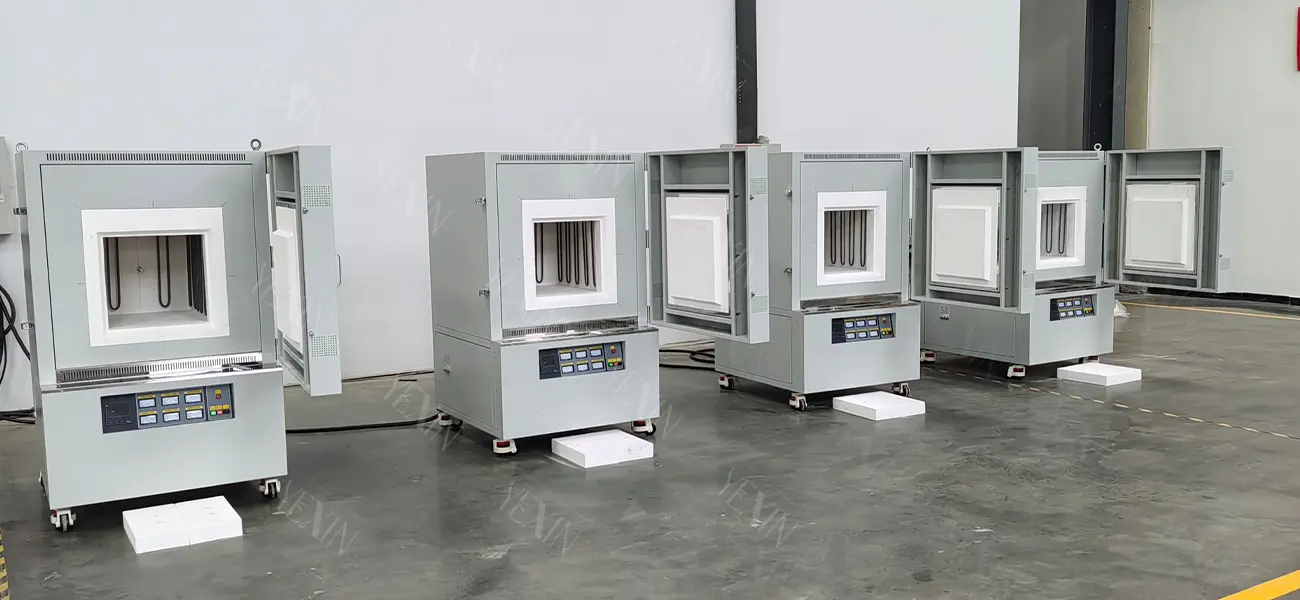
electric muffle furnace is a compact, electrically heated box furnace with a refractory muffle chamber that protects samples from direct contact with heating elements. Ideal for LOI (loss on ignition), ashing, calcination, and small-batch heat treatment, electric muffles offer precise PID control, fast ramping, and low maintenance compared with gas furnaces.
| Parameter | Typical Range / Option |
|---|---|
| Max temperature | 1100–1800 °C (model dependent) |
| Chamber volume | 1–20 L |
| Uniformity | ±2–10 °C (depends on size & setpoint) |
| Heat-up rate | 5–40 °C/min |
| Controller | Basic PID / Programmable multi-segment |
| Thermocouple | Type K / S / B (depending on temp) |
| Power | 110–240 V single phase or 3-phase for larger models |
| Options | LOI kit, exhaust stack, USB logging, inert purge kit |
Q: Are electric muffles suitable for inert atmospheres?
A: Standard models operate in air. For inert gas, choose a gas-purge-capable model or use a tube furnace.
Q: What maintenance is required?
A: Keep chamber clean, inspect/replace elements and thermocouples as needed, calibrate annually for QA.
| Model | Max.temperature | Inner volume | Inner size | Power and Voltage |
| YX-1200-1L | 1200℃ | 1L | 105*105*110mm | 1KW/AC220V |
| YX-1200-4.5L | 1200℃ | 4.5L | 150*150*200mm | 2.5KW/AC220V |
| YX-1200-7.2L | 1200℃ | 7.2L | 200*120*300mm | 3KW/AC220V |
| YX-1200-18L | 1200℃ | 18L | 250*250*300mm | 5KW/AC220V |
| YX-1200-36L | 1200℃ | 36L | 300*300*400mm | 9KW/AC380V |
| YX-1400-3.6L | 1400℃ | 3.6L | 150*150*160mm | 4KW/AC220V |
| YX-1400-8L | 1400℃ | 8L | 200*200*200mm | 6KW/AC220V |
| YX-1400-18L | 1400℃ | 18L | 250*250*300mm | 9KW/AC220V |
Online Message