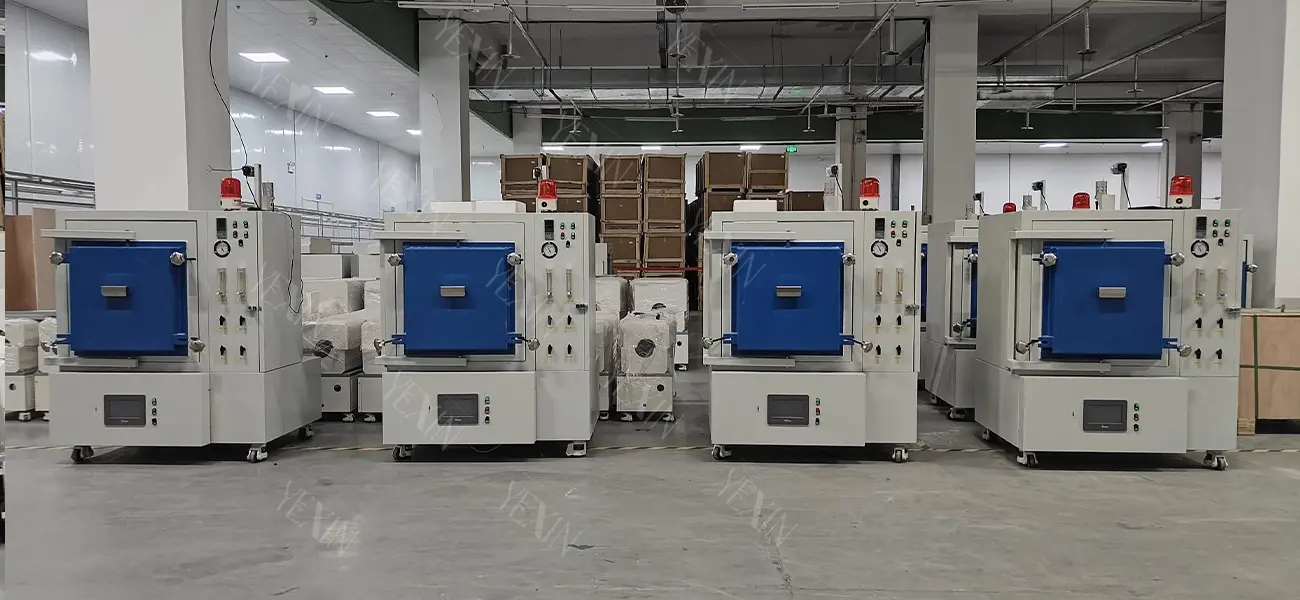
In scientific research and advanced technology industries, the vacuum muffle furnace is equally vital. Within university and research institution laboratories, it is employed for synthesizing and developing new materials, studying high-temperature reaction mechanisms, and conducting chemical analysis such as ash content testing.
TEL+8618836556085
vacuum muffle furnace
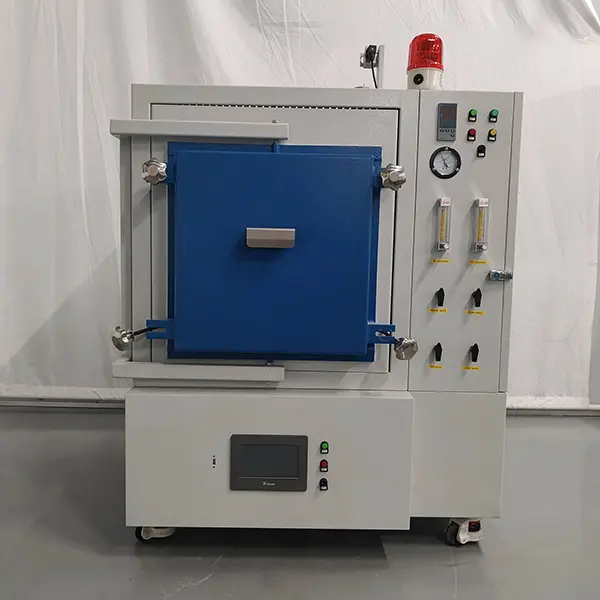
vacuum muffle furnace combines the sample isolation of a muffle chamber with a controlled low-pressure environment to prevent oxidation, contamination, or volatilization during high-temperature processing. Ideal for degassing, oxide-free sintering, binder burnout under low pressure, and sensitive material processing where atmosphere control matters.
What Is a Vacuum Muffle Furnace & How It Differs
A vacuum muffle furnace is a box-type furnace with an internal muffle chamber and an integrated vacuum system (mechanical pump ± backing pump, and often a turbomolecular or diffusion pump for low-pressure work). Compared with air-atmosphere muffles, the vacuum muffle furnace provides:
Oxidation control: prevents sample oxidation at high temperatures.
Reduced contamination: eliminates airborne contaminants and reduces element corrosion from reactive vapors.
Lower boiling/evaporation hazards: volatile components are removed or suppressed under controlled pressure.
Improved material properties: denser sintering, cleaner surfaces, and improved electrical/optical properties for sensitive materials.
Core Components & Typical Setup
Muffle chamber: ceramic fiber or refractory brick muffle (depending on temperature).
Heating elements: FeCrAl for low temps; SiC or MoSi₂ for higher temps (vacuum limits element choices — vendor guidance required).
Vacuum system: mechanical (rotary) pump for rough vacuum; turbomolecular or diffusion pump for high vacuum (optional).
Gas ports: purge/inert gas inlet for backfilling or controlled partial pressure operation.
Control & safety: PID/programmable controller, pressure transducer (vacuum gauge), interlocks for safe venting and over-temp protection.
Seals & flanges: metal or high-temperature elastomer seals rated for vacuum and thermal cycles.
Typical Specifications (Reference Ranges)
Item
Typical Range / Option
Max temperature
800–1800 °C (model dependent)
Ultimate pressure
1×10⁻² to 1×10⁻⁶ mbar (depends on pump configuration)
Chamber volume
0.5–50 L (lab to pilot scale)
Heating elements
FeCrAl / SiC / MoSi₂ (vendor advised for vacuum)
Controls
Programmable PID + pressure control, data logging
Options
Inert gas purge, turbo pump, load lock, viewport, gas dosing
Note: Achievable pressure and max temperature are interdependent; always confirm vendor specifications and pump sizing for your process.
Key Applications
Vacuum sintering of ceramics, metals, and composites (reduced oxidation, improved densification).
Degassing / vacuum drying of polymers, composites, and adhesives.
Vacuum annealing for metallurgy and semiconductor processes.
Low-contamination heat treatment for optics, coatings, and advanced materials.
Binder burnout under low pressure to prevent oxidation by-products.
How to Choose the Right Vacuum Muffle Furnace
Process temperature vs pressure: choose a furnace rated for both your target temperature and the vacuum level needed.
Ultimate vacuum requirement: rough vacuum (10⁻² mbar) vs high vacuum (10⁻⁶ mbar) drives pump selection and cost.
Chamber volume & load form factor: match sample geometry, throughput, and fixtures.
Pump type & backing system: rotary vane + turbo is common for mid/high vacuum; diffusion pumps for specialty needs.
Materials & element compatibility: vacuum can change element lifetime—confirm compatible element types and protective measures.
Gas handling: need for inert backfill, gas dosing, or partial pressures? Ensure proper mass-flow control and gas lines.
Controls & data: pressure control integration, ramp/soak programming, and data logging for QA.
Service & spares: pump maintenance contracts, spare seals, and replacement heaters/thermocouples.
Basic Operating Best Practices
Pump-down procedure: staged pump sequence (roughing → high vacuum pump) with temperature ramps to prevent outgassing spikes.
Purge & backfill: for reactive samples or cooldown, use controlled inert backfill to avoid sudden oxidation.
Bake-out routines: to reduce outgassing and achieve lower base pressures when required.
Load handling: use vacuum-compatible fixtures and avoid volatile contaminants (oils, tapes).
Safety: interlocks to prevent start of heating without sufficient vacuum and safe venting procedures.
Troubleshooting — Quick Guide
Slow pump-down: leak in chamber, outgassing load, or faulty pump—check seals, test helium leak, reduce volatile load.
Pressure rise during hold: outgassing or pump issue—perform bake-out and inspect pump oil or turbo bearings.
Element failure in vacuum: element material incompatible with vacuum or thermal cycling—consult vendor and consider shields or lower ramp rates.
Contamination on samples: improper chamber cleanliness or backfill gas impurity—clean chamber and verify gas purity.
FAQ
Q1: Can vacuum muffle furnaces reach the same max temperatures as air muffles? Sometimes — but achievable max temperature can be limited by element choice and pump coordination; verify vendor ratings for combined temp/pressure operation.
Q2: Do I need a turbo pump? If your process requires high vacuum (≤10⁻⁶ mbar) or fast pump-down for volatiles, a turbo or diffusion pump is recommended. For moderate vacuum (10⁻²–10⁻³ mbar), a rotary backing pump may suffice.
Q3: How often should I service vacuum pumps? Mechanical pumps: service oil and seals per manufacturer schedule (often quarterly or semi-annual depending on use). Turbos: periodic inspection and bearing checks per runtime hours.
 xuye
xuye