xuye
xuye全站搜索
Search the entire website
整站搜索产品中心新闻中心
点击开始搜索
热门搜索
UltraForm-MXFlexiPoly-RNanoForm Z300EcoFab P200
Search the entire website
Scope of application
the application of diffusion heaters has also expanded into advanced materials research and development and scientific research fields that have stringent requirements for the heat treatment environment. In the new energy sector, it is key equipment for manufacturing the passivation layer on the back of solar cells (e.g., PERC cells)
In the precision arena of high-end manufacturing, particularly during the production of semiconductor chips, photovoltaic panels, and optical fiber, temperature control is more than a simple matter of heating and cooling. It’s a delicate art, demanding extremely high uniformity, stability, and controllability. Even the slightest temperature fluctuation or uneven distribution can lead to a sharp drop in product yield, resulting in significant economic losses. It’s precisely this unwavering pursuit of “heat” that has given rise to the diffusion heater, an indispensable core component in these industries.
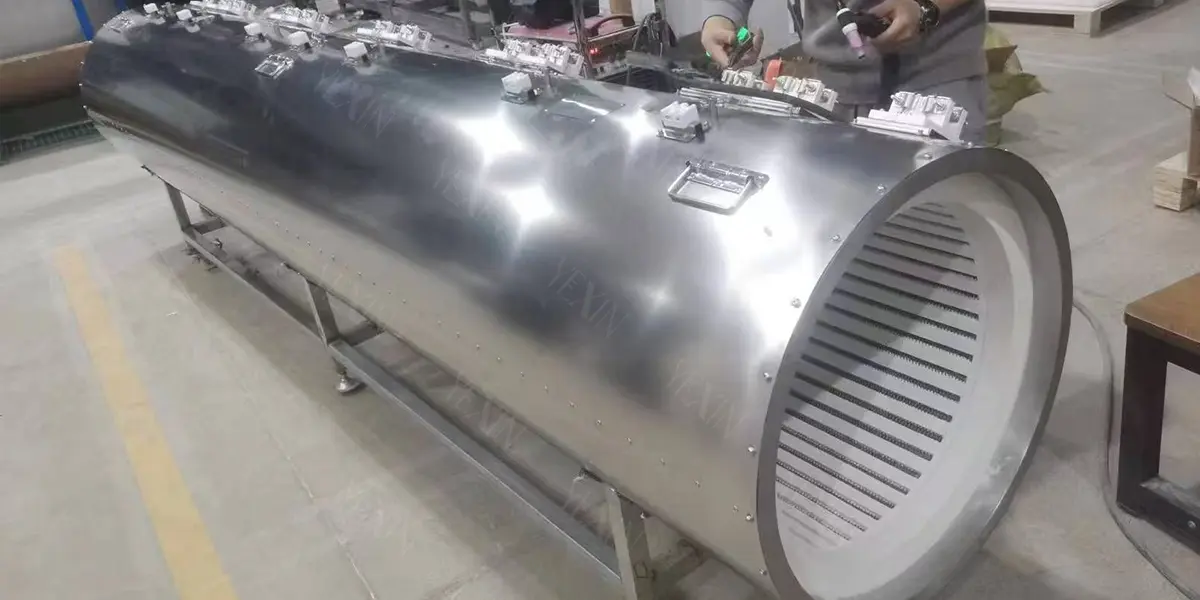
Unlike the blunt, crude heating rods or coils of ordinary heaters, they function like a skilled artist, distributing heat evenly, gently, and precisely throughout the process chamber or wafer through “diffusion,” ensuring a flawless thermal environment throughout the manufacturing process.
What is a Diffusion Heater? — Beyond Traditional Thermal Management Philosophy
1.1 Basic Definition
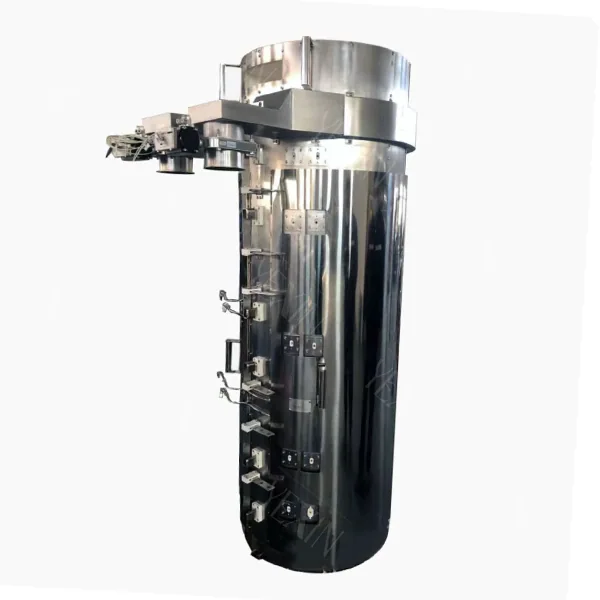
A diffusion heater, sometimes also called a wall heater or distributed heater, is an electric heating device designed to generate a highly uniform and stable temperature field within a sealed chamber. The word “diffusion” in its name accurately describes its core operating principle: rather than using a localized high-temperature heat source for point or line heating, it efficiently and evenly “diffuses” the heat generated by the heating element across the entire heater surface through heat conduction and radiation, creating a uniform heat field over a large area with virtually no temperature gradients.
1.2 Essential Differences from Traditional Heating Methods
To better understand the value of diffusion heaters, we compare them with several traditional heating methods:
VS. Resistance Wire/Heater Rods: Traditional resistance wire heating uses a “point” or “line” heat source, resulting in highly concentrated heat and a high risk of localized overheating and significant temperature gradients. This makes it difficult to achieve uniform heating over a large area, often requiring complex air ducts or liquid circulation systems to achieve uniform temperature distribution. However, even this uniformity is limited.
VS Infrared Lamp Heating: Infrared heating is fast, but its energy is highly directional. It’s very sensitive to the object’s shape and surface emissivity, which can easily result in a yin-yang side of the heated object, making temperature uniformity control more challenging.
VS Induction Heating: Induction heating is highly efficient, but it’s only suitable for conductive materials. The heating depth and uniformity depend on the frequency of the alternating magnetic field and the shape of the workpiece, limiting its applicability.
The philosophy of a diffusion heater is that it itself is a uniform heat field generator. Through a carefully designed heating element layout, highly efficient thermally conductive insulation materials, and a low thermal inertia structure, it creates a “heat wall” that surrounds any object near or in contact with it, ensuring a stable, uniform thermal environment.
Getting to the Heart of the Diffusion Heater: Structural Design and Operating Principle
A typical diffusion heater is a multi-layer composite structure, a sophisticated fusion of materials science and thermodynamics.
2.1 Core Structure Analysis
Substrate: This is the heater’s skeleton and foundation. Common materials include:
Stainless steel (such as 310S): Low cost, excellent corrosion resistance, and suitable for most environments where cleanliness requirements are not extremely stringent.
Inconel: A nickel-chromium alloy with excellent high-temperature oxidation resistance and strength, it is a common choice for high-end applications.
Quartz: Extremely pure, absolutely free of metal contamination, with excellent thermal stability and optical transparency, it is commonly used in semiconductor diffusion processes and photovoltaic processes where cleanliness requirements are extremely high.
Graphite: Highly resistant to extreme temperatures, with a low coefficient of thermal expansion and high thermal conductivity, but requires use in a vacuum or protective atmosphere to prevent oxidation.
Heating Element: Typically, an etched foil element or wire element is used.
Etched foil element: A complex circuit pattern is photoetched onto a metal alloy foil (such as Inconel). This design allows for extremely precise resistance distribution. By adjusting the density and width of the circuit paths, the heating power in different areas can be precisely controlled, which is a key technology for achieving ultra-high uniformity.
Wire element: A wire is coiled onto a substrate in a specific serpentine or spiral pattern. This offers design flexibility and relatively low cost, but uniformity is generally slightly inferior to etched foil designs.
Insulation layer: This layer electrically isolates the heating element from the substrate and the external environment. Common materials include:
Mica: A common insulating material due to its excellent insulation and thermal conductivity.
Ceramic: Materials such as alumina ceramics provide higher temperature insulation and improved mechanical strength.
Sheath/Encapsulation: Encapsulates the entire heating structure, providing protection, insulation, and heat transfer. This may be another metal plate, or the heating element embedded in ceramic powder and then sintered (as in a metal tubular heater).
2.2 Working Principle: The Secret of Temperature Uniformity
The physical principles behind the uniform temperature field achieved by diffusion heaters are based on two key principles:
Thermal Conduction: Heat generated by the heating element is first transferred through the insulating layer to the entire metal substrate. Because metal is an excellent thermal conductor, heat is rapidly transferred from the hot spot to the cold spot, initially achieving a uniform temperature.
Thermal Radiation: When the substrate is heated to a high temperature (typically >400°C), thermal radiation becomes the dominant heat transfer method. The entire heater surface acts like an ideal blackbody radiator, radiating heat to the workpiece in the chamber and the surrounding environment. Since radiant heat is inversely proportional to the square of the distance, a large, uniformly heated radiating surface can create a very uniform thermal environment in front of it.
The word “diffusion” is reflected here: heat “diffused” from the linear heating element to the entire substrate through conduction, and then “diffused” to the entire process chamber space through radiation.
Why Choose Diffusion Heaters? Unparalleled Advantages
The complex structure of diffusion heaters delivers superior performance unmatched by traditional heating methods.
Superior Temperature Uniformity: This is their core advantage. Advanced diffusion heaters can maintain temperature uniformity across the working area to within ±1°C or even ±0.5°C. This is crucial for temperature-sensitive processes such as semiconductor doping, oxidation, and CVD.
Excellent High-Temperature Performance: Utilizing high-temperature-resistant alloys and ceramic insulation materials, diffusion heaters can operate stably for extended periods above 1000°C, even reaching up to 1800°C, meeting the requirements of most high-temperature processes.
Low Thermal Inertia & Fast Response: Compared to bulky sintered ceramic heater blocks, diffusion heaters are typically thinner, lighter, and have a lower heat capacity. This means they can heat up and cool down faster, improving production cycle times and facilitating more precise PID temperature control.
Clean Process: The heaters, specifically made of quartz and Inconel materials, release no pollutants at high temperatures, eliminating the risk of metal ion contamination of process products (such as wafers) and ensuring product purity and yield.
Long Service Life & High Reliability: The rugged integrated structure and high-temperature-resistant materials enable it to withstand repeated thermal cycling and provide strong resistance to mechanical vibration and shock, resulting in an extremely long mean time between failures (MTBF).
Energy Efficiency: Because heat is transferred directly to the workpiece via radiation rather than first heating a large volume of air, energy efficiency is improved, resulting in greater energy savings.
Core Application Areas of Diffusion Heaters
Diffusion heaters are the unsung heroes of high-end manufacturing. Their primary applications include:
Semiconductor Fabrication
This is the earliest and most important application area for diffusion heaters. They are the core heating component in nearly all diffusion furnaces and vertical furnaces.
Thermal Oxidation: Growing a silicon dioxide layer on the wafer surface.
Diffusion: Doping impurities into the wafer to form a PN junction.
Chemical Vapor Deposition (CVD): For example, LPCVD (low-pressure chemical vapor deposition) grows polysilicon, silicon nitride, and silicon oxide thin films.
Annealing: Activating dopant ions and repairing lattice defects.
Photovoltaic Industry
In the production of solar cells, diffusion heaters are used in tubular PECVD (plasma-enhanced chemical vapor deposition) and diffusion furnaces.
PN Junction Formation: Phosphorus or boron sources are diffused onto silicon wafers.
Anti-Reflection Coating Deposition: Silicon nitride films are deposited on the surface of solar cells for anti-reflection and passivation.
Fiber Optic Drawing: The process of drawing an optical fiber preform into a thin optical fiber requires an extremely high-temperature and stable heat source to melt the preform ends. Drawing furnaces composed of diffusion heaters provide a perfectly uniform, high-temperature heat field, which is critical for ensuring consistent optical fiber geometry and optical performance.
Other High-End Applications: Analytical Instruments: Used for heating the inlets and transfer lines of gas chromatography (GC) and mass spectrometry (MS) to prevent sample condensation.
Vacuum Coating: Provides preheating for substrates within vacuum chambers.
Aerospace: Used in composite material curing furnaces, vacuum thermal testing, and other applications.

| Operating temperature | ≤1300℃ |
| Length of constant temperature zone | 500mm-1000mm |
| Furnace body diameter | Φ90~Φ360 mm (3~12 inches) |
Online Message