xuye
xuye全站搜索
Search the entire website
整站搜索产品中心新闻中心
点击开始搜索
热门搜索
UltraForm-MXFlexiPoly-RNanoForm Z300EcoFab P200
Search the entire website
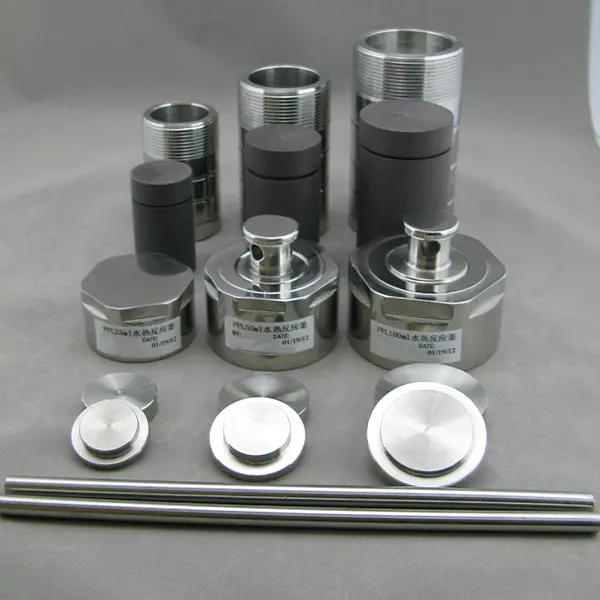
hydrothermal synthesis autoclave reactor is a high-pressure laboratory vessel designed for performing chemical reactions under high temperature and high pressure conditions. It is widely used for crystal growth, nanomaterial preparation, and chemical synthesis. The autoclave consists of a stainless steel outer shell and a Teflon (PTFE) inner liner, ensuring both durability and chemical resistance.
This dual-layer structure allows scientists to conduct reactions that require extreme conditions, promoting the formation of compounds that are impossible to synthesize under normal atmospheric environments.
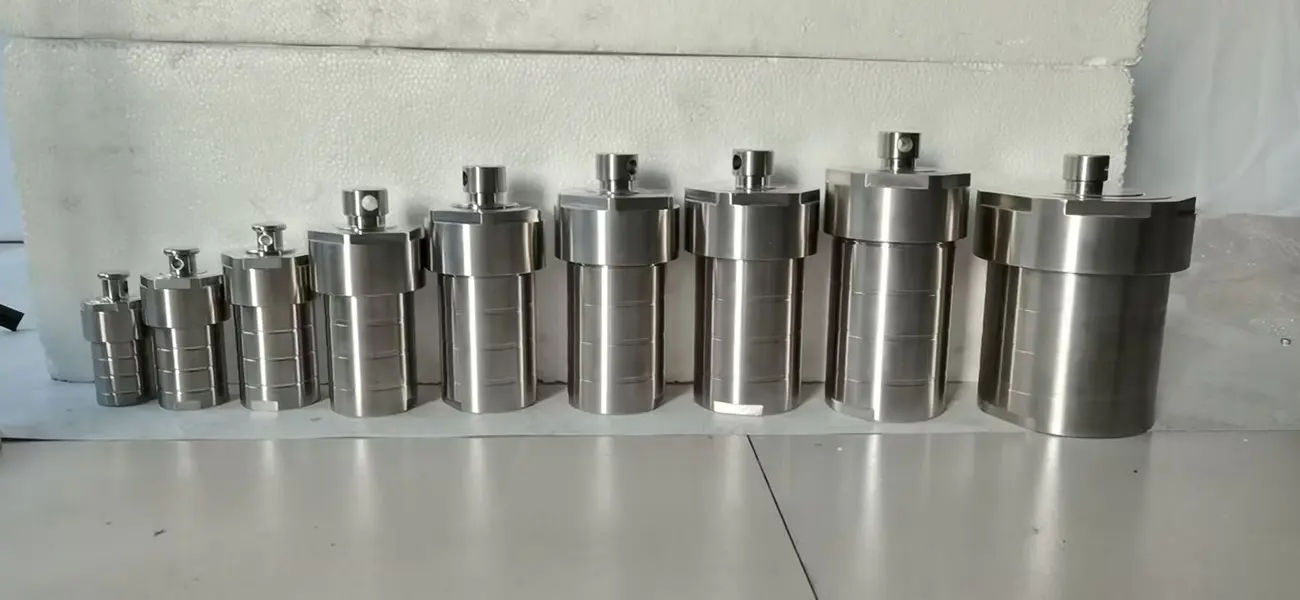
The hydrothermal synthesis reactor works by sealing a reaction mixture inside the PTFE liner, which is then enclosed within the stainless steel chamber. When heated in an oven or furnace, the internal pressure increases due to solvent vaporization. This creates a hydrothermal environment, allowing controlled crystallization, oxidation, or reduction reactions to occur safely.
Such conditions are essential in nanomaterials research, geochemistry, and chemical material synthesis, where temperature and pressure directly affect particle morphology and crystal structure.
The reactor is essential in various scientific and industrial fields, including:
Its versatility makes it a must-have for chemical laboratories, universities, and R&D institutions.
| Model | Volume(mL) | pressure(MPa) | temperature(℃) | Lining material(PTFE) |
| YHHW-5PTFE | 5 | 3 | 220 | polytetrafluoroethylene |
| YHHW-10PTFE | 10 | 3 | 220 | polytetrafluoroethylene |
| YHHW-15PTFE | 15 | 3 | 220 | polytetrafluoroethylene |
| YHHW-25PTFE | 25 | 3 | 220 | polytetrafluoroethylene |
| YHHW-50PTFE | 50 | 3 | 220 | polytetrafluoroethylene |
| YHHW-100PTFE | 100 | 3 | 220 | polytetrafluoroethylene |
| YHHW-150PTFE | 150 | 3 | 220 | polytetrafluoroethylene |
| YHHW-200PTFE | 200 | 3 | 220 | polytetrafluoroethylene |
| YHHW-250PTFE | 250 | 3 | 220 | polytetrafluoroethylene |
| YHHW-300PTFE | 300 | 3 | 220 | polytetrafluoroethylene |
| YHHW-400PTFE | 400 | 3 | 220 | polytetrafluoroethylene |
| YHHW-500PTFE | 500 | 3 | 220 | polytetrafluoroethylene |
| YHHW-1000PTFE | 1000 | 3 | 220 | polytetrafluoroethylene |
| YHHW-1500PTFE | 1500 | 3 | 220 | polytetrafluoroethylene |
| YHHW-2000PTFE | 2000 | 3 | 220 | polytetrafluoroethylene |
| YHHW-2500PTFE | 2500 | 3 | 220 | polytetrafluoroethylene |
| YHHW-3000PTFE | 3000 | 3 | 220 | polytetrafluoroethylene |
| Model | Volume(mL) | pressure(MPa) | temperature(℃) | Lining material(PPL) |
| YHHB-5PPL | 5 | 3 | 300 | Para-polyphenylene |
| YHHB-10PPL | 10 | 3 | 300 | Para-polyphenylene |
| YHHB-15PPL | 15 | 3 | 300 | Para-polyphenylene |
| YHHB-25PPL | 25 | 3 | 300 | Para-polyphenylene |
| YHHB-50PPL | 50 | 3 | 300 | Para-polyphenylene |
| YHHB-100PPL | 100 | 3 | 300 | Para-polyphenylene |
| YHHB-150PPL | 150 | 3 | 300 | Para-polyphenylene |
| YHHB-200PPL | 200 | 3 | 300 | Para-polyphenylene |
| YHHB-250PPL | 250 | 3 | 300 | Para-polyphenylene |
| YHHB-300PPL | 300 | 3 | 300 | Para-polyphenylene |
| YHHB-400PPL | 400 | 3 | 300 | Para-polyphenylene |
| YHHB-500PPL | 500 | 3 | 300 | Para-polyphenylene |
| YHHB-1000PPL | 1000 | 3 | 300 | Para-polyphenylene |

Online Message