xuye
xuye全站搜索
Search the entire website
整站搜索产品中心新闻中心
点击开始搜索
热门搜索
UltraForm-MXFlexiPoly-RNanoForm Z300EcoFab P200
Search the entire website
A stainless steel jacketed reactor is a widely used industrial and laboratory vessel designed for chemical reactions requiring precise temperature control. By incorporating a jacket around the main reactor vessel, this equipment allows heating or cooling media to circulate efficiently, ensuring stable and uniform thermal conditions throughout the reaction process.
Stainless steel jacketed reactors are extensively applied in chemical processing, pharmaceuticals, food and beverage production, biotechnology, polymers, and fine chemicals. Their durability, corrosion resistance, and flexibility make them a core component of modern reaction systems.
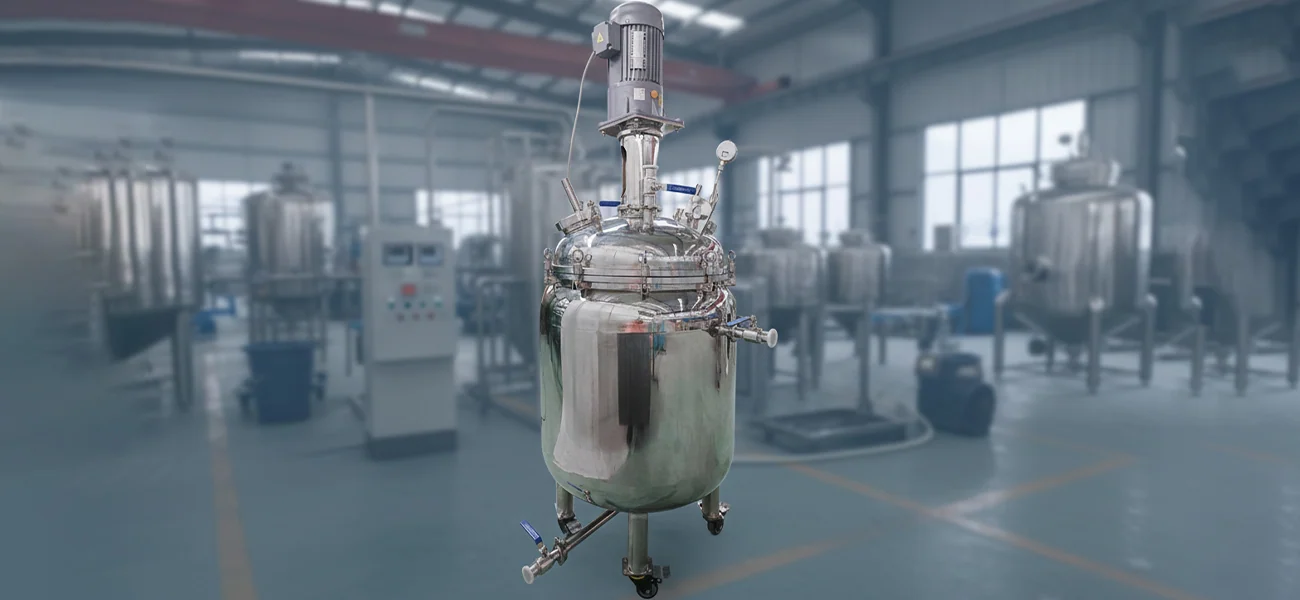
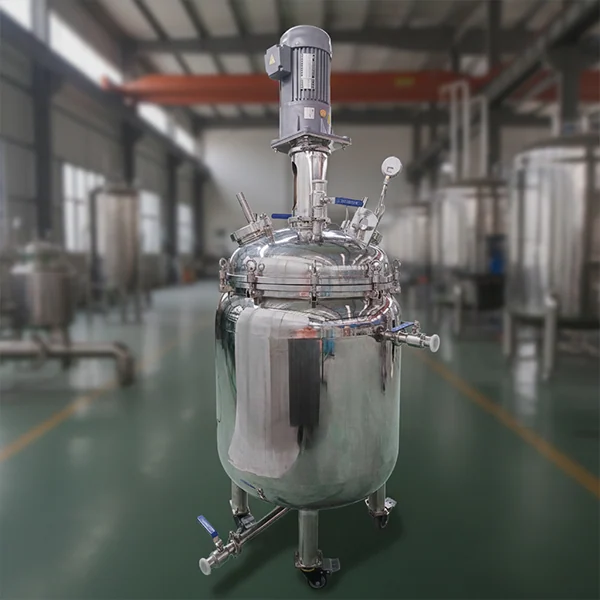
A stainless steel jacketed reactor consists of:
The jacket enables controlled heating or cooling by circulating hot oil, steam, or cooling water, making the reactor suitable for exothermic and endothermic reactions.
The choice of material directly affects reactor lifespan, chemical compatibility, and compliance with industry standards.
Designed to withstand internal pressure, chemical corrosion, and thermal stress.
Each jacket design serves different process requirements.
This system ensures consistent reaction conditions and high product quality.
Advanced reactors integrate automated temperature control systems for real-time adjustment.
Efficient mixing is essential for uniform heat and mass transfer. Common agitator types include:
Agitator selection depends on viscosity, reaction type, and process scale.
Used for synthesis, polymerization, esterification, and neutralization reactions.
Ideal for API synthesis, intermediates, crystallization, and sterile processing.
Applied in fermentation, flavor extraction, and heat-sensitive food production.
Used for enzyme reactions, bio-based materials, and controlled biochemical processes.
These benefits make jacketed reactors indispensable in regulated industries.
Safety features commonly include:
Modern systems integrate PLC or DCS control for automated operation.
Stainless steel jacketed reactors are designed for easy maintenance. Smooth internal surfaces reduce residue buildup, while CIP (Clean-in-Place) systems simplify cleaning procedures.
| Model | BSF-10L | BSF-20L | BSF-30L | BSF-50L | BSF-100L |
| Power(W) | 200(1:3) | ||||
| External dimensions(mm) | 540*480*1800 | 550*700*1830 | 550*700*1950 | 700*600*2050 | 700*800*2270 |
| Number of cauldron lid openings | 8 | ||||
| Temperature measurement port | 50.5 chuck / φ8 temperature measuring tube | 50.5 chuck / φ12 temperature measuring tube | |||
| Drop hole | 50.5 mm chuck/1000 ml funnel | 50.5 mm chuck / 2000 ml funnel | |||
| Return hole | 50.5 chuck / φ38 | 50.5 chuck / φ38 | |||
| sight glass | φ51 | φ89 | |||
| sight glass | φ32 | / | |||
| Feeding port | / | φ89 | |||
| Pressure gauge port | 50.5 mm chuck / integrated pressure gauge | ||||
| exhaust vent | 2-way exhaust valve | ||||
| Mixing hole | SUS316L propeller-type mixing impeller | ||||
| High and low temperature resistance (°C) | -120~260 | ||||
| Stainless steel thickness (mm) | φ3 | φ4 | |||
| Discharge valve port diameter | φ35 | ||||

Online Message