xuye
xuye全站搜索
Search the entire website
整站搜索产品中心新闻中心
点击开始搜索
热门搜索
UltraForm-MXFlexiPoly-RNanoForm Z300EcoFab P200
Search the entire website
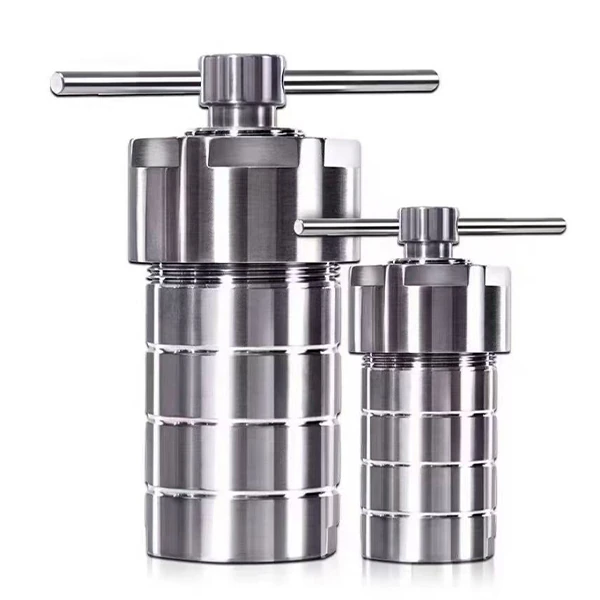
An autoclave for hydrothermal synthesis is a specially designed high-pressure reactor used to perform chemical reactions at high temperature and pressure conditions. It is commonly used in laboratories and research institutes for the synthesis of nanomaterials, crystal growth, and advanced material preparation. The hydrothermal synthesis autoclave provides a controlled environment that enables the formation of materials that cannot be synthesized under normal temperature and pressure.
Typically, the hydrothermal autoclave reactor consists of two main parts: the inner Teflon liner (PTFE) and the outer stainless-steel body. The inner liner is resistant to corrosion and allows reactions involving acids or alkalis, while the outer body provides the mechanical strength to withstand internal pressure.
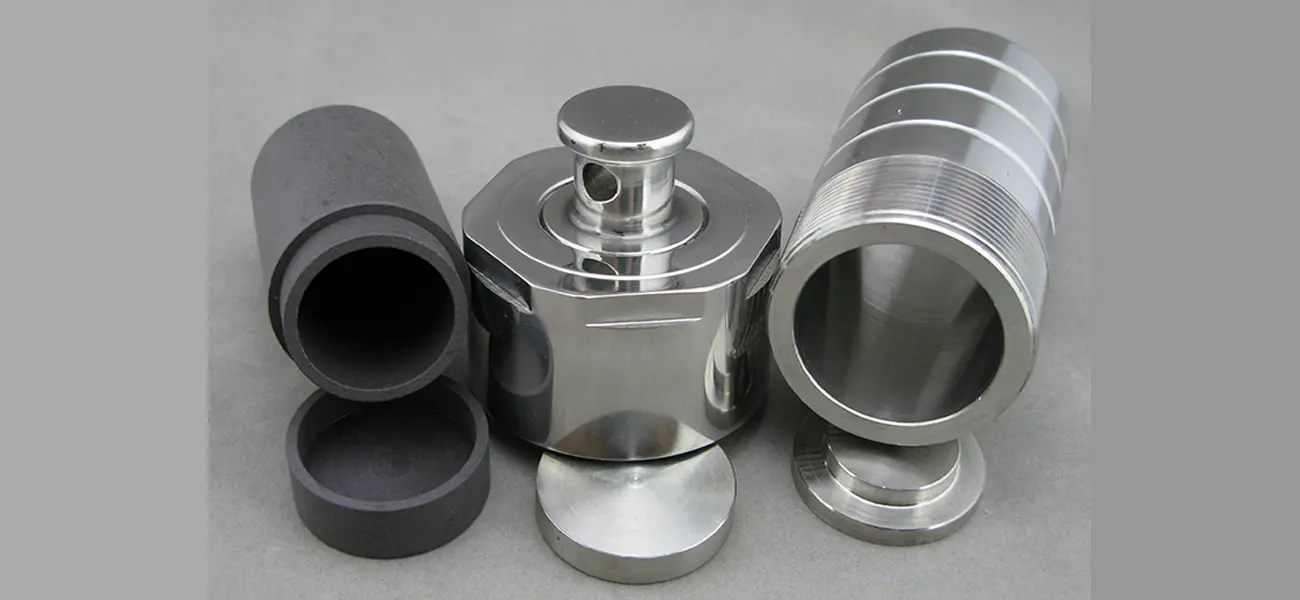
The hydrothermal synthesis process involves heating an aqueous solution of chemical precursors in a sealed autoclave. When the solution is heated above the boiling point of water, the vapor pressure increases inside the vessel, allowing unique reactions and crystal growth to occur.
This method allows researchers to control crystal size, morphology, and chemical composition, which is crucial for nanoparticle and functional material synthesis.
The hydrothermal autoclave is widely used in many scientific and industrial fields, such as:
Because of its versatility, the autoclave for hydrothermal synthesis is an essential tool in chemistry, materials science, environmental science, and nanotechnology.
A typical laboratory hydrothermal autoclave includes:
Some advanced models come with digital temperature control, magnetic stirring, or programmable settings for automation and enhanced performance.
Following these precautions ensures long service life and safe operation of the hydrothermal synthesis reactor.
Our laboratory hydrothermal autoclaves are designed for reliability, precision, and safety.
We offer:
With years of experience in laboratory furnace and reactor manufacturing, we provide durable, high-performance autoclaves suitable for a wide range of hydrothermal applications.
| Model | Volume(mL) | pressure(MPa) | temperature(℃) | Lining material(PPL) |
| YHHB-5PPL | 5 | 3 | 300 | Para-polyphenylene |
| YHHB-10PPL | 10 | 3 | 300 | Para-polyphenylene |
| YHHB-15PPL | 15 | 3 | 300 | Para-polyphenylene |
| YHHB-25PPL | 25 | 3 | 300 | Para-polyphenylene |
| YHHB-50PPL | 50 | 3 | 300 | Para-polyphenylene |
| YHHB-100PPL | 100 | 3 | 300 | Para-polyphenylene |
| YHHB-150PPL | 150 | 3 | 300 | Para-polyphenylene |
| YHHB-200PPL | 200 | 3 | 300 | Para-polyphenylene |
| YHHB-250PPL | 250 | 3 | 300 | Para-polyphenylene |
| YHHB-300PPL | 300 | 3 | 300 | Para-polyphenylene |
| YHHB-400PPL | 400 | 3 | 300 | Para-polyphenylene |
| YHHB-500PPL | 500 | 3 | 300 | Para-polyphenylene |
| YHHB-1000PPL | 1000 | 3 | 300 | Para-polyphenylene |
| Model | Volume(mL) | pressure(MPa) | temperature(℃) | Lining material(PTFE) |
| YHHW-5PTFE | 5 | 3 | 220 | polytetrafluoroethylene |
| YHHW-10PTFE | 10 | 3 | 220 | polytetrafluoroethylene |
| YHHW-15PTFE | 15 | 3 | 220 | polytetrafluoroethylene |
| YHHW-25PTFE | 25 | 3 | 220 | polytetrafluoroethylene |
| YHHW-50PTFE | 50 | 3 | 220 | polytetrafluoroethylene |
| YHHW-100PTFE | 100 | 3 | 220 | polytetrafluoroethylene |
| YHHW-150PTFE | 150 | 3 | 220 | polytetrafluoroethylene |
| YHHW-200PTFE | 200 | 3 | 220 | polytetrafluoroethylene |
| YHHW-250PTFE | 250 | 3 | 220 | polytetrafluoroethylene |
| YHHW-300PTFE | 300 | 3 | 220 | polytetrafluoroethylene |
| YHHW-400PTFE | 400 | 3 | 220 | polytetrafluoroethylene |
| YHHW-500PTFE | 500 | 3 | 220 | polytetrafluoroethylene |
| YHHW-1000PTFE | 1000 | 3 | 220 | polytetrafluoroethylene |
| YHHW-1500PTFE | 1500 | 3 | 220 | polytetrafluoroethylene |
| YHHW-2000PTFE | 2000 | 3 | 220 | polytetrafluoroethylene |
| YHHW-2500PTFE | 2500 | 3 | 220 | polytetrafluoroethylene |
| YHHW-3000PTFE | 3000 | 3 | 220 | polytetrafluoroethylene |

Online Message