xuye
xuye全站搜索
Search the entire website
整站搜索产品中心新闻中心
点击开始搜索
热门搜索
UltraForm-MXFlexiPoly-RNanoForm Z300EcoFab P200
Search the entire website
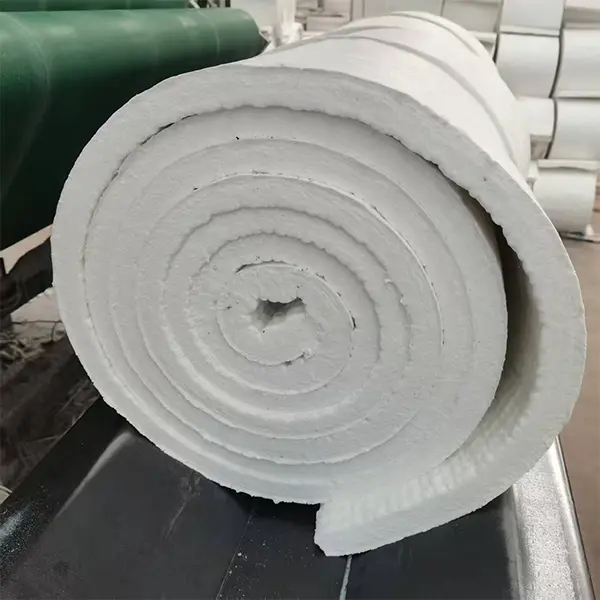
Ceramic fiber wool, also known as ceramic fiber insulation wool, is a high-efficiency thermal insulation material widely used in high-temperature industrial equipment. Manufactured from high-purity alumina-silica materials through a controlled melt-spinning process, ceramic fiber wool combines low thermal conductivity, excellent chemical stability, superior temperature resistance, and lightweight properties, making it one of the most trusted refractory materials today.
For industries that rely on consistent high-temperature performance—such as metallurgy, heat-treatment furnaces, kiln manufacturing, petrochemical processing, and power generation—ceramic fiber wool delivers unmatched energy-saving benefits and long-term operational reliability.

Ceramic fiber wool typically withstands continuous exposure to 1000°C – 1430°C depending on the grade.
This makes ceramic fiber wool ideal for extreme industrial environments where traditional insulation materials degrade quickly.
One of the biggest advantages of ceramic fiber wool is its very low thermal conductivity, which significantly reduces heat loss inside furnaces or kilns. This directly translates to:
Ceramic fiber wool weighs far less than conventional refractory bricks or castables. Its fiber-based structure provides:
Ceramic fiber insulation wool maintains its integrity even under continuous thermal cycling, sudden heating, or rapid cooling. It also resists most corrosive chemicals except strong alkalis and hydrofluoric acid.
Ceramic fiber wool is widely used in:
Because metallurgical operations require stable, high-temperature environments, ceramic fiber wool helps maintain consistent heating efficiency.
Common applications include:
Its lightweight structure reduces preheating time and minimizes thermal mass.
Ceramic fiber wool is used to insulate:
Its durability under prolonged exposure to harsh chemical gases is a key benefit.
In power plants, ceramic fiber wool insulates:
The material effectively reduces heat loss and improves overall plant efficiency.
Although ceramic fiber wool is primarily industrial, it is also used in:
It provides strong heat protection in compact heating appliances.
Ceramic fiber wool outperforms most alternative insulation materials in almost every high-temperature application.
Raw, untreated fiber for vacuum forming, filling gaps, or producing insulation shapes.
Processed wool compressed into blankets for easier application.
Used for manufacturing modules, boards, textiles, and cast shapes.
Maximum temperature resistance up to 1430°C, suitable for extreme conditions.
High-purity alumina and silica powders are selected.
Materials melt above 2000°C in an electric or gas furnace.
The molten material is blown or spun into lightweight fibers.
Fibers fall into a forming chamber, where air reduces density and creates fluffy wool.
Wool is compressed, bagged, or further processed into blankets or boards.
Ceramic fiber wool helps industries reduce energy consumption by minimizing heat loss. Compared with heavy refractory bricks, its insulation capacity is significantly higher, reducing operating costs and CO₂ emissions.
Factors to consider include:
Professional consultation ensures the best performance.
| Ceramic fiber blanket index | ||||||||
| Type | Common | Standard | High Purity | High Aluminium | Zirconia | |||
| Classification temperature (℃) | 1100 | 1260 | 1260 | 1360 | 1400 | |||
| Working Temperature(℃) | <1000 | 1050 | 1100 | 1260 | 1350 | |||
| Color | White | Pure white | Pure white | Pure white | Pure white | |||
| Density (kg/m3) | 96/128/160 | 96/128/160 | 96/128/160 | 128/160 | 128/160 | |||
| Shrinkage on heating(%) | -4 | -3 | -3 | -3 | -3 | |||
| (24 hours,density as 128/m3) | (1000℃) | (1000℃) | (1100℃) | (1250℃) | (1350℃) | |||
| Thermal conductivity by different temperature (w/m.k)(density as 128kg/m3) | 0.09(400℃) | 0.09(400℃) | 0.09(400℃) | 0.12(600℃) | 0.16(800℃) | |||
| 0.16(800℃) | 0.16(800℃) | 0.16(800℃) | 0.20(1000℃) | 0.20(1000℃) | ||||
| 0.20(1000℃) | ||||||||
| Tensile strength (MPa) | 0.04 | 0.04 | 0.04 | 0.04 | 0.04 | |||
| (density as 128kg/m3) | ||||||||
| Chemical composition(%) | AL2O3 | 44 | 46 | 47-49 | 52-55 | 39-40 | ||
| AL2O3+SiO2 | 96 | 97 | 99 | 99 | ||||
| AL2O3+SiO2+ZrO2 | – | 99 | ||||||
| ZrO2 | 15-17 | |||||||
| Fe2O3 | <1.2 | <1.0 | 0.2 | 0.2 | 0.2 | |||
| Na2O+K2O | ≤0.5 | ≤0.5 | 02 | 0.2 | 0.2 | |||
| Ceramic Fiber Blanket Size | ||||||||
| Size | ||||||||
| Length(MM) | Width(MM) | Thickness(MM) | ||||||
| Ceramic Fiber Blanket | 14400/7200/3600 | 610/1220 | 6-50 | |||||
| Other specifications can be customized according to customer requirements | ||||||||

Online Message