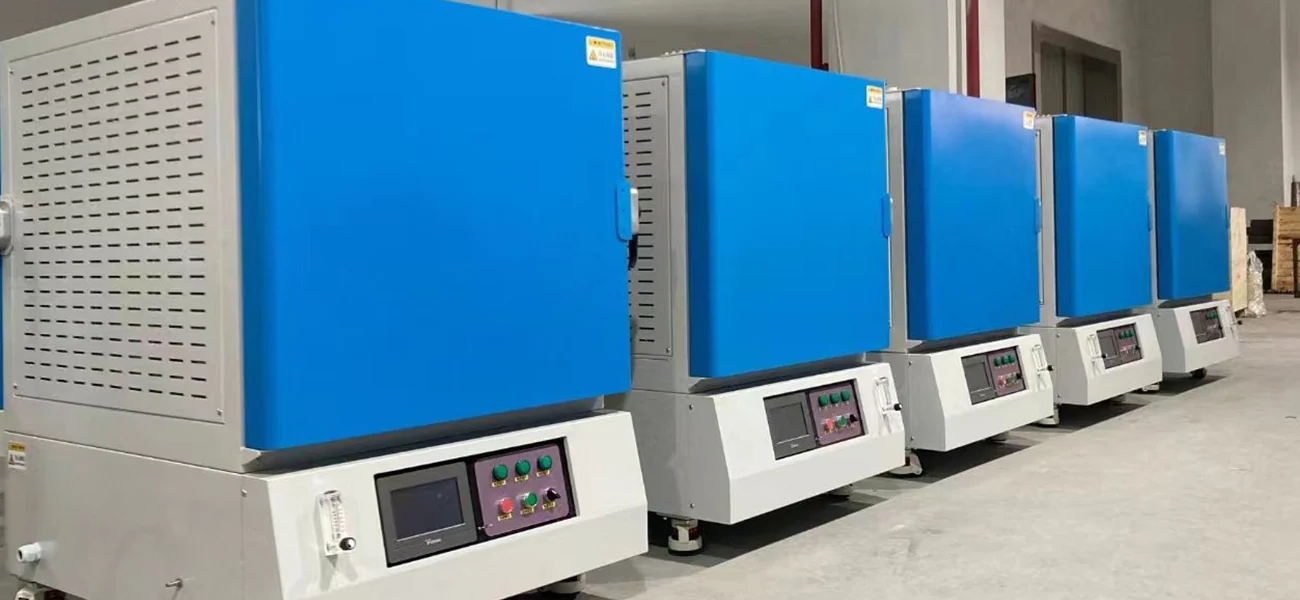
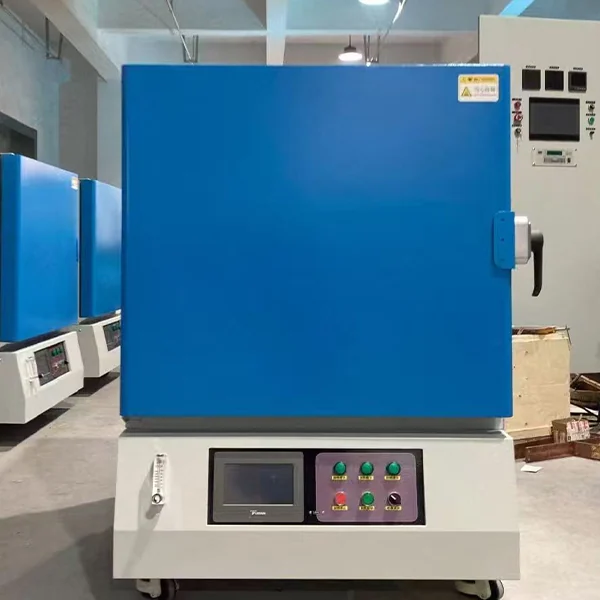
It is widely used in heat treatment processes such as bright annealing, quenching, and tempering of metal materials, preventing oxidation and decarburization of workpieces during processing and significantly enhancing the mechanical properties of tool steels and alloy steels
TEL+8618836556085
industrial muffle furnace
An industrial muffle furnace is a robust, high-capacity box furnace designed for continuous or batch processing in factories — used for ash processing, heat treatment, calcination, stress relief, and high-temperature material preparation where sample isolation from heating elements and combustion products is required. Industrial models emphasize throughput, longevity, and serviceability.
What makes an industrial muffle furnace different?
Capacity & Duty Cycle: Larger chamber volumes and heavier-duty elements for 24/7 or high-throughput batch work.
Durability: Thicker refractory, replaceable fiber modules or brick linings, commercial-grade elements (SiC/MoSi₂), rugged door seals and hinges.
Serviceability: Modular insulation panels and easy access for element replacement minimize downtime.
Controls & Integration: PLC or industrial controllers, networked data logging (Modbus/Profinet), HMI for recipe management and integration with MES/SCADA.
Safety & Compliance: Industrial interlocks, exhaust management, NFPA/local codes compliance, and usually three-phase power distribution.
Typical Industrial Use Cases
Bulk LOI/Ashing for cement, minerals, coal, and biomass processing labs supporting production QA.
Calcination for catalyst and pigment production.
Heat treatment & annealing of small batches or fixtures.
Sample prep & QC where many crucibles/trays are processed per shift.
Waste reduction / stabilization of contaminated materials before disposal.
Representative Technical Specs (Example Ranges)
Parameter
Typical Industrial Range
Max temperature
1100 °C – 1800 °C
Chamber volume
20 L – 800 L (or larger for tunnel/continuous designs)
Heating elements
SiC (mid-high temp), MoSi₂ (≥1600 °C), industrial Kanthal
Conveyor/tunnel feed, gas purge, exhaust scrubber, automated loading
Installation & Plant Integration Checklist
Electrical supply: Confirm three-phase voltage, neutral/grounding, cable gauges, and breaker sizing. Plan for inrush current.
Foundation & Floor Load: Large muffle furnaces can be heavy—verify floor load rating and consider vibration-isolation pads.
Ventilation & Exhaust: Design exhaust ducting, scrubbers, or heat recovery. Ensure compliance with emissions rules.
Utilities: Compressed air, inert gas supply (if required), and chilled water for ancillary equipment.
Material Handling: Conveyors, carts, or lift tables for safe loading/unloading and repeatable workflows.
Controls Integration: Map PLC I/O, SCADA tags, recipe storage, and data archiving path.
Safety & Permits: Fire detection, emergency shutdown, lockout/tagout, and local environmental permits.
Spare Parts & Service: Stock element sets, thermocouples, door seals, and arrange preventative maintenance contracts.
Common Industrial Problems & Mitigations
Frequent element failures: Caused by corrosive off-gassing or rapid thermal cycling. Mitigate with sacrificial trays, stepped ramps, or gas purging.
Poor throughput due to long cool-downs: Use heat-recovery or multiple smaller furnaces in rotation; consider continuous tunnel designs.
Emission compliance failures: Add filtration/scrubbing and monitor emissions continuously.
Data gaps for QC audits: Integrate furnace logs with MES and store tamper-evident records.
SEO Tips for Industrial Product Pages
Target B2B keywords: “industrial muffle furnace for cement plant”, “high-capacity muffle furnace supplier”, and long-tails like “continuous muffle furnace for LOI at scale”.
Provide downloadable spec sheets, installation checklists, and case studies (pdf) to capture procurement leads.
Use schema.org/Product and HowTo/FAQ structured data, plus technical datasheets behind a contact form to qualify leads.
FAQ
Q1: Can industrial muffle furnaces run 24/7? Yes—industrial designs are built for high duty cycles but require scheduled maintenance and careful process control to extend element life.
Q2: How to reduce emissions from LOI runs? Install exhaust capture with scrubbers, and use covered crucibles or staged pre-burn to reduce volatile spikes.
 xuye
xuye