xuye
xuye全站搜索
Search the entire website
整站搜索产品中心新闻中心
点击开始搜索
热门搜索
UltraForm-MXFlexiPoly-RNanoForm Z300EcoFab P200
Search the entire website
lab scale rotary kiln is a specialized high-temperature thermal treatment equipment designed for laboratory research, pilot-scale tests, and small-scale production trials. Compared with large industrial rotary kilns, the laboratory rotary kiln features a compact size, flexible operation, precise temperature control, and lower energy consumption. It is capable of simulating industrial processes in a limited space, making it an essential research tool for universities, R&D institutions, new materials enterprises, and environmental research centers.
The kiln body is made of high-temperature resistant materials and equipped with an automatic temperature control system. It enables continuous feeding and discharging of materials, which allows for uninterrupted experiments. The lab rotary kiln is widely applied in new material synthesis, catalyst preparation, metal oxides experiments, biomass pyrolysis, activated carbon production, and waste treatment studies.
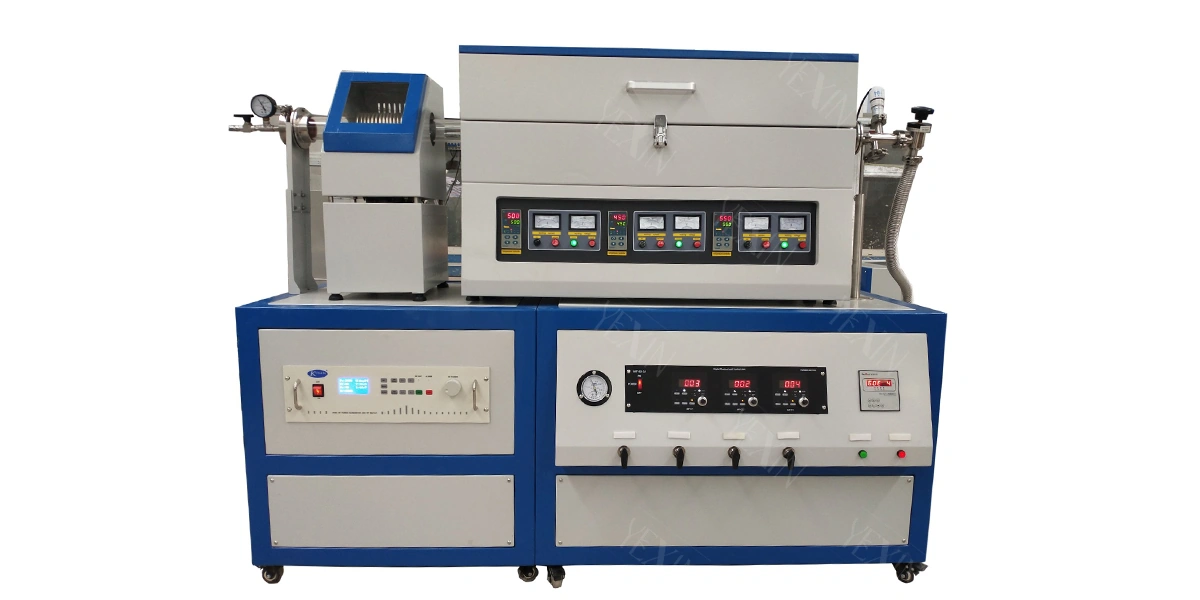
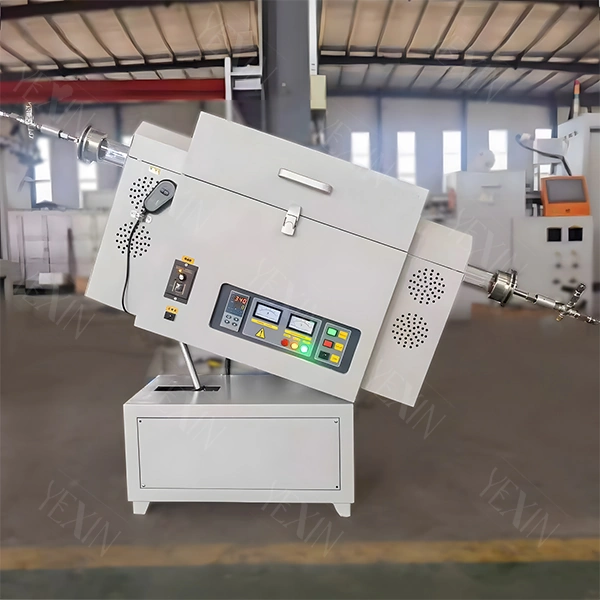
Although smaller in scale, the lab scale rotary kiln shares the same fundamental structure as industrial kilns. The main components include:
The kiln body is the core of the system, generally made of welded steel plates lined with refractory materials or ceramic fiber insulation. This ensures stable operation under high temperatures. Typical diameters range from 50 mm to 500 mm, with lengths from 0.5 m to 3 m, meeting diverse laboratory requirements.
Consisting of a motor, reducer, and gear mechanism, the transmission system drives the kiln body to rotate slowly. The rotational speed is adjustable, typically between 0.2–10 rpm. The rotation ensures that the material is evenly exposed to heat during processing.
The lab kiln can adopt electric heating, gas heating, or infrared heating methods. Electric heating rotary kilns are most common, equipped with precision temperature controllers that maintain stability from room temperature up to 1200°C or even 1600°C.
For continuous operation, the rotary kiln is equipped with a feeding hopper and a cooling discharge device. This minimizes manual handling and increases experimental efficiency.
Modern laboratory rotary kilns come with intelligent controllers, PLC systems, and data acquisition devices. These allow real-time monitoring of temperature, rotation speed, and atmosphere, with additional safety features such as over-temperature alarms and power-off protection.
The working principle is similar to that of industrial rotary kilns. The process includes:
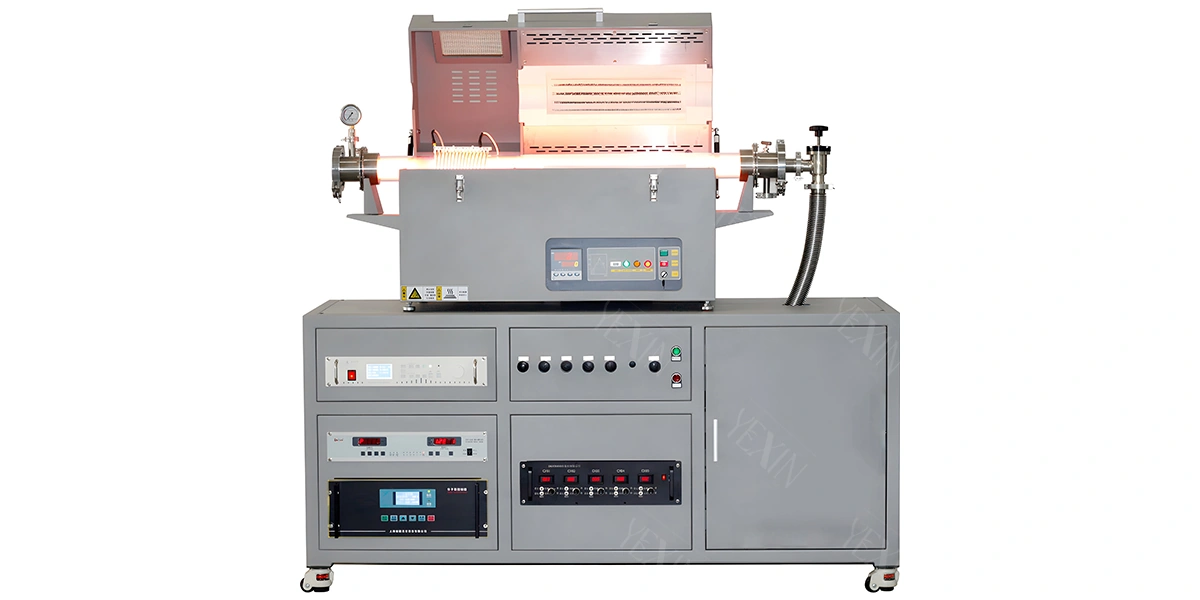
The lab rotary kiln is widely used in multiple fields:
When purchasing a lab scale rotary kiln, consider the following factors:

| Model | YXG-1100-R |
| Power | 15KW |
| Voltage | AC220V 50/60Hz |
| Operating temperature | Short-term working time 1000℃ (high purity quartz tube, t≤0.5h) |
| Continuous operating temperature | 900℃ |
| Heating rate | 1-10℃/min |
| Temperature control method | Fuzzy PID control and self-tuning adjustment, intelligent 30-segment programmable control, over-temperature and broken couple alarm function |
| Heating zone length | 900mm(300+300+300mm) |
| Length of constant temperature zone | 600mm |
| Capacity | Powder material processed once: 2L |
| Heating element | Resistance wire (molybdenum-doped iron-chromium-aluminum alloy) |
| Constant temperature accuracy | ±1℃ |
| Furnace tube size | Special-shaped quartz tube φ150*700+080*350*2mm |
| Tilt angle | -2-15°(Adjustable) |
| Furnace tube speed | 1-5rpm(Adjustable) |
| Sealing form | Use clamp connection to rotate the seal |
| Vacuum pressure | Mechanical pump can reach 10Pa (extra vacuum component pressure measurement is required) |
Online Message