xuye
xuye全站搜索
Search the entire website
整站搜索产品中心新闻中心
点击开始搜索
热门搜索
UltraForm-MXFlexiPoly-RNanoForm Z300EcoFab P200
Search the entire website
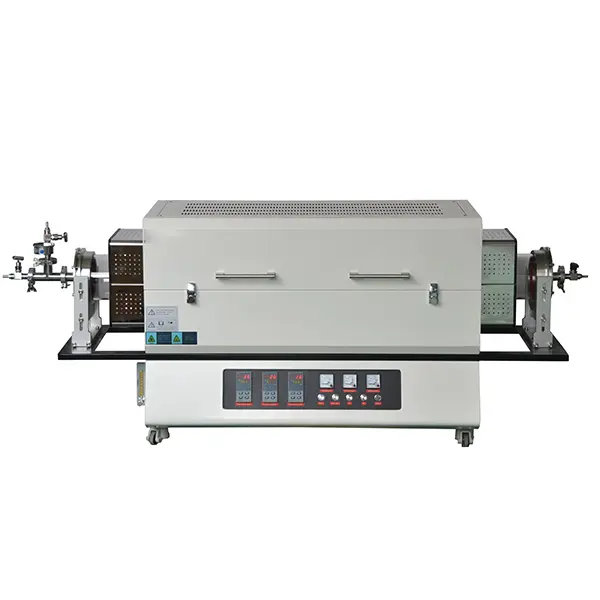
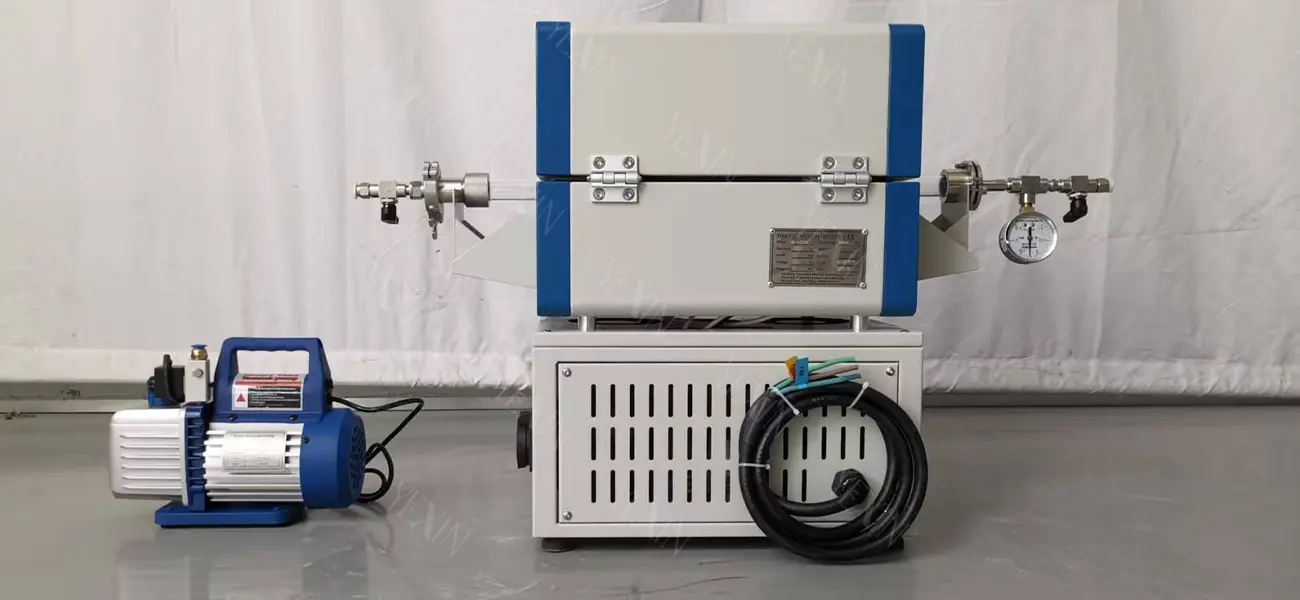
mini tube furnace is a compact, benchtop heater that provides precise, high-temperature processing for small samples under controlled atmospheres. It’s ideal when you need lab-grade performance but have limited space or low sample throughput.
Key Features
Compact footprint: typically < 40 cm wide; fits a crowded bench or fume hood.
Fast heat-up/cool-down: low thermal mass for quick cycle times.
Accurate control: PID/programmable controller, multi-segment ramps/soaks, ±1 °C stability (model-dependent).
Atmosphere versatility: air, inert (Ar/N₂), reducing (H₂ with safety), or vacuum options.
Interchangeable tubes: quartz/alumina/SiC in small IDs (e.g., 25–60 mm).
Safety: over-temp cutoff, door/cover interlock, gas purge & exhaust fittings.
Typical Applications
Rapid annealing/tempering of metals, semiconductors, and glass.
Sintering/calcination of ceramics and battery materials (pilot recipes).
CVD/thermal decomposition for catalysts and thin films (small scale).
Method development before scaling to larger furnaces.
Teaching labs & QA/QC where repeatability matters.
Tube material:
Quartz—clean, vacuum-friendly, great for CVD & mid-temperature work.
Alumina (99%+)—oxidizing atmospheres and higher temps (≥1600 °C).
SiC/graphite—specialized, high-temp or chemically aggressive use.
Split vs. solid body: split housings simplify tube swaps and boat loading.
Gas handling: 1–3 MFCs, back-pressure control, H₂ safety interlocks, tail-gas scrubber.
Vacuum: KF/CF flanges, rotary/turbo pump packages, cold trap.
Fixtures: quartz boats, crucible hangers, sample holders, rotary agitation (mini-rotary).
Data & compliance: USB/RS-485/Ethernet logging, recipe management, CE/UL.
Selection Guide (quick)
Temperature class: ≤1200 °C (FeCrAl), 1400–1500 °C (SiC), 1600–1800 °C (MoSi₂).
Tube ID & hot-zone length: match sample size + gas flow needs; allow 10–20% margin.
Atmosphere: vacuum or reactive gases? Add proper seals, MFCs, and safety.
Uniformity needs: consider 2-zone or longer hot zone if you run gradients or batch boats.
Throughput & cycle time: small hot zone = fast cycles; ensure power headroom.
Best Practices
Pre-bake tubes and purge (3–5× volume) before heating to remove moisture.
Use slow ramps near material transitions (glass softening, binder burnout).
Protect seals from condensables (cold trap) and replace O-rings regularly.
Verify thermocouple calibration; log recipes for repeatability.
Mini Tube Furnace FAQ
Q: Can it run hydrogen?
A: Yes—with dedicated H₂ MFCs, leak checks, exhaust, and interlocks (and local safety compliance).
Q: How “vacuum” is vacuum?
A: With elastomer seals + rotary pump: ~1–10 Pa; with metal seals + turbo: 10⁻³–10⁻⁵ Pa (tube/fixturing dependent).
Q: What tube should I choose?
A: CVD/surface work → quartz; high-temp oxidizing → alumina; harsh chem/high temp → SiC/graphite (non-oxidizing).
| Model | Max temperature | Heating zone length | Constant temperature zone length | Power and voltage | Furnace tube size | Dimensions |
| YXG-1200-A1 | 1200℃ | 200mm | 60mm | 1.5kW/AC220V | φ30/50*500mm | 800*340*400mm |
| YXG-1200-A2 | 1200℃ | 440mm | 120mm | 3kW/AC220V | φ30/100*1000mm | 1120*480*530mm |
| YXG-1200II-200 | 1200℃ | 200+200mm | 200mm | 3KW/AC220V | φ30/100*1000mm | 1100*420*560mm |
| YXG-120OIII-200 | 1200℃ | 3*200mm | 3*60mm | 4.5KW/AC220V | φ30/100*1000mm | 1400*420*560mm |
| YXG-1400-400 | 1400℃ | 400mm | 120mm | 5kW/AC220V | φ30/100*1000mm | 1200*500*660mm |
| YXG-140OIl-200 | 1400℃ | 200+200mm | 200mm | 5kW/AC220V | φ30/100*1000mm | 1200*500*660mm |
| YXG-1700-290 | 1700℃ | 290mm | 80mm | 6kW/AC220V | φ30/100*1000mm | 1300*640*870mm |
Online Message