xuye
xuye全站搜索
Search the entire website
整站搜索产品中心新闻中心
点击开始搜索
热门搜索
UltraForm-MXFlexiPoly-RNanoForm Z300EcoFab P200
Search the entire website
Scope of application
In electronics manufacturing, they facilitate curing and drying of coatings, adhesives, and PCB components at controlled temperatures (200-400°C) to prevent component damage. The food and pharmaceutical industries rely on them for moisture analysis and pyrogen removal from equipment
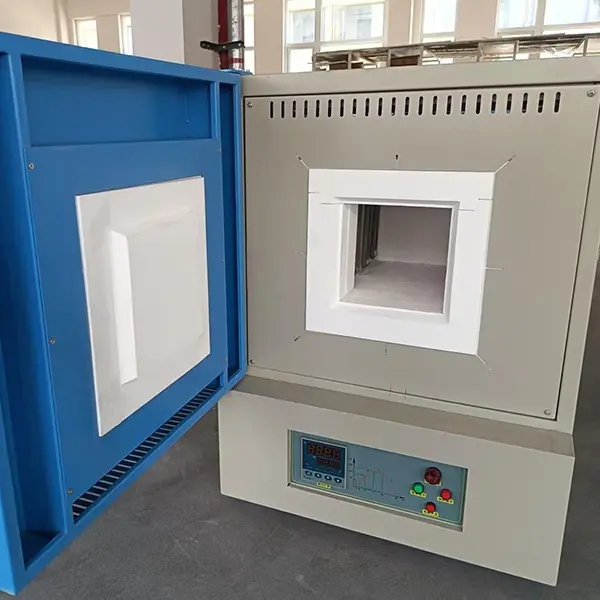
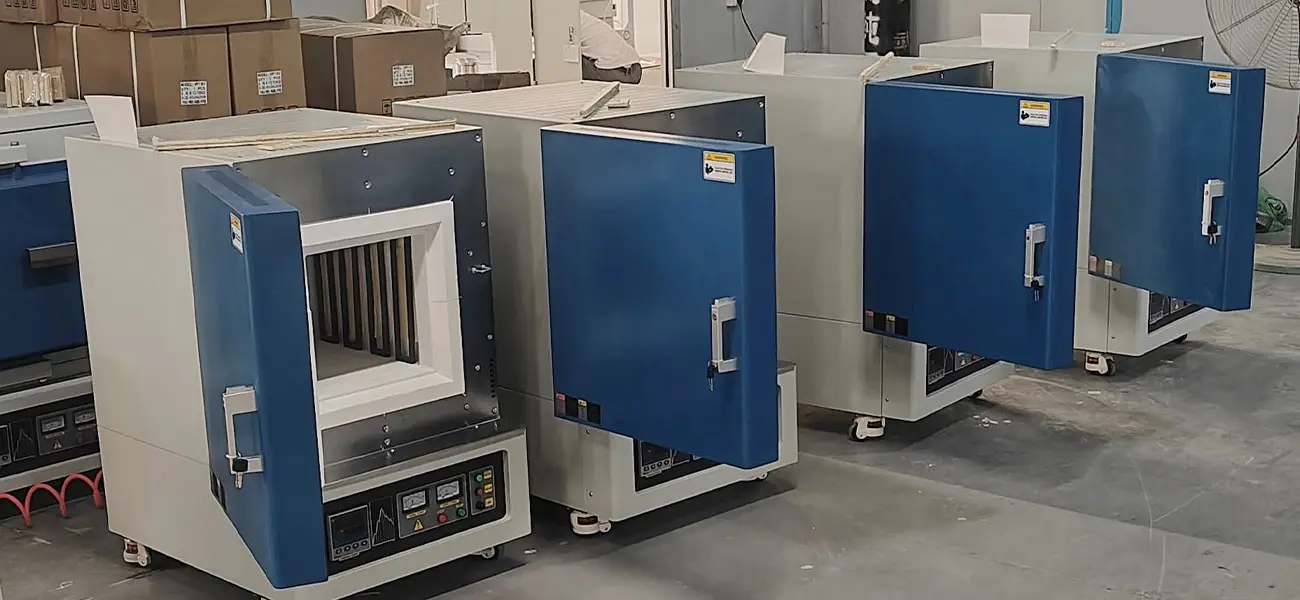
A muffle oven is a high-temperature heating device primarily used for high-temperature processes in laboratories and industry, such as ashing, sintering, annealing, and heat treatment. Its core feature is isolated heating, which prevents direct contact between the sample and the flame or combustion gases, ensuring a contamination-free, high-precision heat treatment environment.
1.1 Main Features
High-Temperature Range: Typically 300°C–1800°C (varies significantly between models)
Precise Temperature Control: PID intelligent control ensures minimal temperature fluctuation (±1°C–±5°C)
Isolated Heating: The chamber is sealed to prevent sample contamination
Wide Applications: Laboratories, Materials Science, Metallurgy, Chemical Engineering, Food Testing, etc.
Working Principle
Electricity → Heat: Electric current passing through a heating element (such as a resistance wire) generates high temperatures.
Uniform Heating: Heat is evenly distributed within the furnace through radiation and convection.
Temperature Control:
Thermocouples monitor temperature and provide feedback to a PID controller.
The controller adjusts power output to maintain a stable set temperature.
Sample Handling: Samples are heated without direct flame to prevent contamination.
Classification by Function
Standard Muffle Oven: General-purpose, suitable for ashing, sintering, etc.
Atmosphere Muffle Oven: Accepts inert gases such as N₂ and Ar
Vacuum Muffle Oven: For easily oxidized materials (such as titanium alloys)
Rapid Heating Muffle Oven: Heating rates >20°C/min (for scientific research)
Material Sintering (Ceramics, Metal Powders)
Thermal Analysis (TGA, DSC-assisted experiments)
5.2 Industrial
Metallurgical Heat Treatment (Annealing, Quenching)
Electronic Component Firing (MLCC, Magnetic Materials)
Glass/Ceramic Manufacturing (Glaze Firing)
5.3 Quality Control
ASTM D3174 (Coal Ash Determination)
ISO 1171 (Solid Fuel Ash Analysis)
USP <281> (Pharmaceutical Residue on Ignition)
| Model | Max.temperature | Inner volume | Inner size | Power and Voltage |
| YX-1200-1L | 1200℃ | 1L | 105*105*110mm | 1KW/AC220V |
| YX-1200-4.5L | 1200℃ | 4.5L | 150*150*200mm | 2.5KW/AC220V |
| YX-1200-7.2L | 1200℃ | 7.2L | 200*120*300mm | 3KW/AC220V |
| YX-1200-18L | 1200℃ | 18L | 250*250*300mm | 5KW/AC220V |
| YX-1200-36L | 1200℃ | 36L | 300*300*400mm | 9KW/AC380V |
| YX-1400-3.6L | 1400℃ | 3.6L | 150*150*160mm | 4KW/AC220V |
| YX-1400-8L | 1400℃ | 8L | 200*200*200mm | 6KW/AC220V |
| YX-1400-18L | 1400℃ | 18L | 250*250*300mm | 9KW/AC220V |
Online Message