xuye
xuye全站搜索
Search the entire website
整站搜索产品中心新闻中心
点击开始搜索
热门搜索
UltraForm-MXFlexiPoly-RNanoForm Z300EcoFab P200
Search the entire website
Stainless steel autoclave reactors are specialized pressure vessels designed for conducting chemical reactions under elevated temperature and pressure conditions. These reactors are widely used in laboratories, research institutes, and industrial facilities where controlled reaction environments are essential.
Thanks to their durability and corrosion resistance, stainless steel autoclave reactors provide long-term reliability and consistent performance across a wide range of chemical processes.
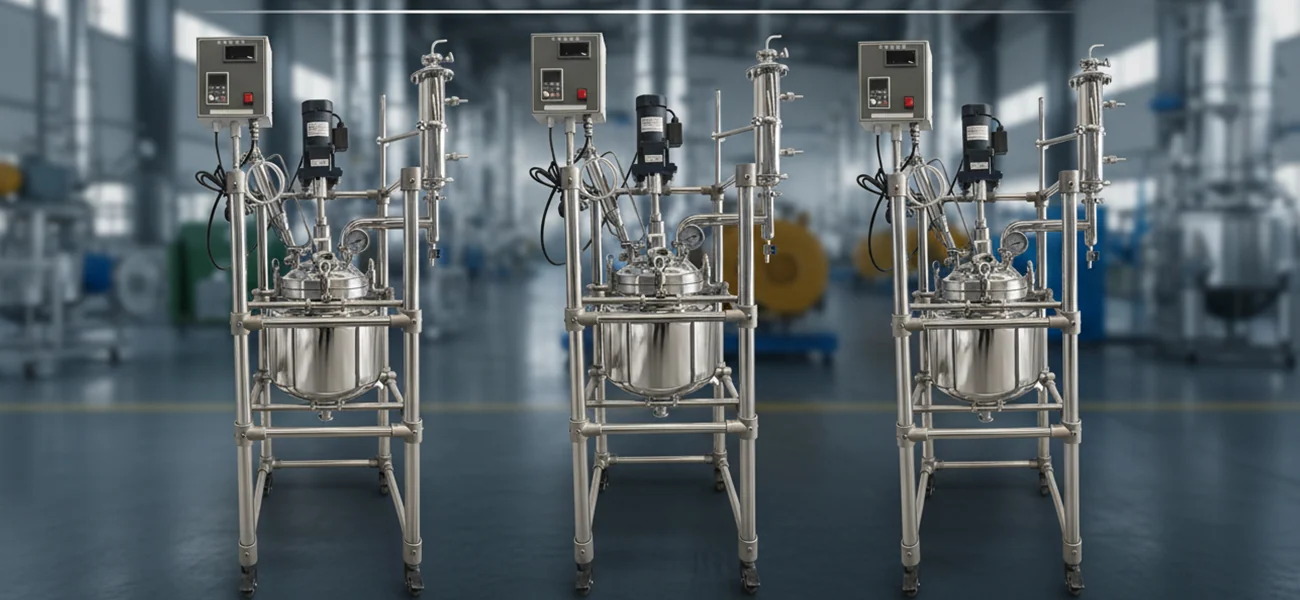
Stainless steel is one of the most preferred materials for autoclave reactors due to its:
These characteristics ensure safe operation even under demanding conditions.
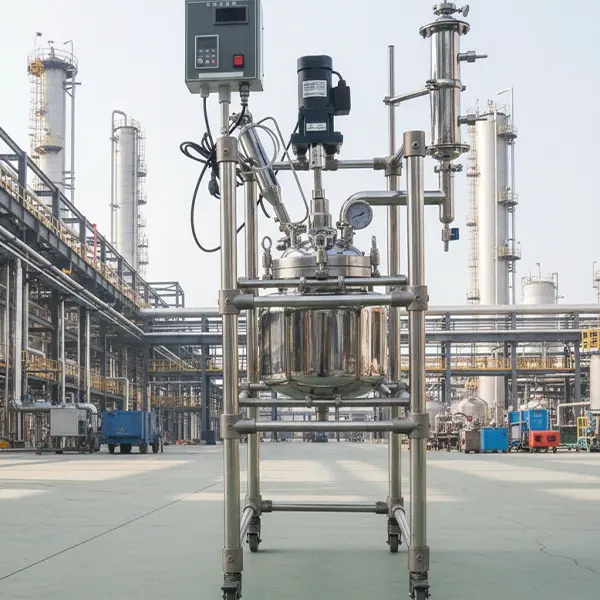
A typical stainless steel autoclave reactor consists of:
Designed to withstand internal pressure and thermal stress.
Includes metal gaskets, PTFE liners, or O-rings to prevent leakage.
Mechanical or magnetic stirring ensures homogeneous reactions.
Maintains stable temperature profiles throughout the process.
Digital controllers monitor and regulate temperature, pressure, and stirring speed.
Stainless steel autoclave reactors are typically designed to operate at:
Custom designs are available for higher operating limits.
Ideal for small-scale and specialty chemical production.
Enhance mass and heat transfer efficiency.
PTFE-lined reactors provide extra corrosion protection for aggressive chemicals.
Used for complex reactions requiring precise pressure and temperature control.
Applied in lithium battery materials, catalysts, and hydrogen storage research.
Used for waste treatment, biomass conversion, and green chemistry processes.
Essential equipment for universities and research laboratories.
When choosing a stainless steel autoclave reactor, consider:
Proper selection ensures optimal performance and long service life.
Manufacturers often provide customization options including:
Customized reactors improve process efficiency and scalability.
Correct installation includes:
Following standard operating procedures enhances safety and performance.
Although stainless steel autoclave reactors have a higher initial cost, their durability and low maintenance requirements result in lower total lifecycle costs.
With advancements in automation and digital control, modern stainless steel autoclave reactors are becoming more intelligent, efficient, and user-friendly. Integration with data logging and remote monitoring systems is increasingly common.
Stainless steel autoclave reactors offer unmatched reliability, safety, and versatility for high-pressure chemical processes. Whether for laboratory research or industrial production, they provide a stable foundation for innovation and process optimization.
| Model | BSF-10L | BSF-20L | BSF-30L | BSF-50L | BSF-100L |
| Power(W) | 200(1:3) | ||||
| External dimensions(mm) | 540*480*1800 | 550*700*1830 | 550*700*1950 | 700*600*2050 | 700*800*2270 |
| Number of cauldron lid openings | 8 | ||||
| Temperature measurement port | 50.5 chuck / φ8 temperature measuring tube | 50.5 chuck / φ12 temperature measuring tube | |||
| Drop hole | 50.5 mm chuck/1000 ml funnel | 50.5 mm chuck / 2000 ml funnel | |||
| Return hole | 50.5 chuck / φ38 | 50.5 chuck / φ38 | |||
| sight glass | φ51 | φ89 | |||
| sight glass | φ32 | / | |||
| Feeding port | / | φ89 | |||
| Pressure gauge port | 50.5 mm chuck / integrated pressure gauge | ||||
| exhaust vent | 2-way exhaust valve | ||||
| Mixing hole | SUS316L propeller-type mixing impeller | ||||
| High and low temperature resistance (°C) | -120~260 | ||||
| Stainless steel thickness (mm) | φ3 | φ4 | |||
| Discharge valve port diameter | φ35 | ||||

Online Message